Thursday, 29 October 2026

Why Sudden Pace Note Losses Distort Stage Times and Driver Comparisons

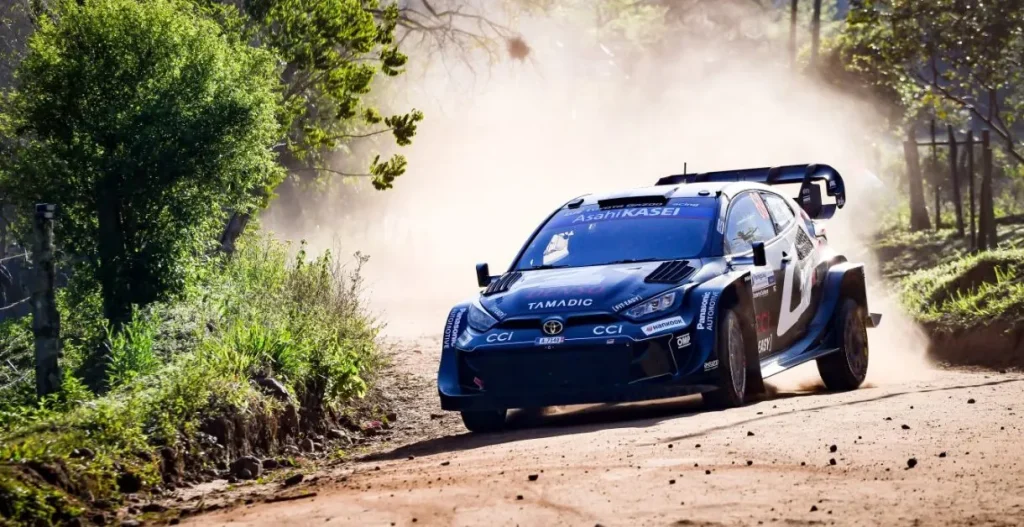
A Toyota GR Yaris Rally1 World Rally Championship car navigates a sunlit gravel stage, kicking up a large plume of dust along a track bordered by trees and roadside fencing.

The High-Speed Dependency on Continuous Instruction

Evaluating rally drivers against one another by stage times assumes both crews can commit to road hazards with equal visibility and preparation. Unlike circuit racing, stage rallying relies entirely on the co-driver delivering advance descriptions of blind crests, tightenings, and braking points. When that communication breaks down, comparing pure driver speed becomes impossible, as the driver is immediately forced to lift off the throttle and rely solely on forward sightlines.

Physical disruption inside the car remains a persistent risk on violent surfaces. During the Cambyreta stage of Rally del Paraguay, M-Sport driver Josh McErlean experienced dropped notes when co-driver Eoin Treacy had his note book knocked from his hands over a hard jump landing. In incidents involving WRC lost pace notes, the driver loses the ability to anticipate what lies beyond blind brows, turning high-commitment sections into cautious, reactive driving that artificially widens the timing gap to rivals.

Reconnaissance Deficits and Incomplete Information

Time loss does not only occur when physical books are dropped; flawed or missing descriptions from reconnaissance create similar performance deficits. Low-speed recce restrictions can limit how accurately a crew maps high-speed behavior, as Thierry Neuville observed during the 2022 Rally Japan when recce limits around 60 km/h made judging full-speed line commitments difficult.

When pace details are missing or compromised, drivers must brake early and scan visually to preserve the car. At the 2026 Rally Japan, Takamoto Katsuta conceded 25.9 seconds on a single stage while managing missing pacenote data alongside earlier puncture damage. When interpreting rally splits and driver performance, such sudden drops in pace frequently reflect a breakdown in operational information rather than an underlying disparity in driver skill.

Official reference: FIA World Rally Championship regulations.

Why Mixed Weather Skews Driver Comparisons in MotoGP Qualifying

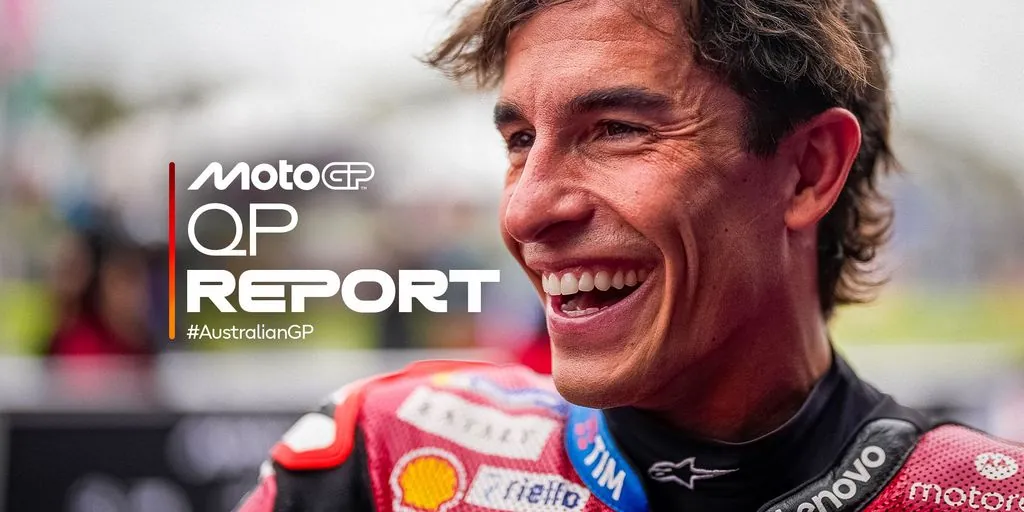
A motorcycle racer smiles while wearing racing leathers.

Understanding Gaps in Changing Track Conditions

In modern Grand Prix motorcycle racing, qualifying times are often used to gauge how riders stack up against one another. However, large lap-time deficits in wet or drying sessions frequently reflect track evolution and timing windows rather than pure talent differentials. When rainfall fluctuates over the course of a single session, the grip available to one competitor rarely mirrors what another encounters just a few minutes earlier or later.

A clear example occurred during the 2026 Australian Grand Prix weekend at Phillip Island. After an early crash at Miller Corner forced a swap to a secondary bike, Marc Marquez Recovers from Turn 4 Crash to Take Australian GP Pole with a 1:34.203 lap time, putting him 1.494 seconds clear of Alex Marquez. While a gap exceeding a second is exceptionally rare in dry premier-class qualifying, changing precipitation across the session meant competitors were dealing with variable asphalt dampness throughout their respective flying efforts.

Equipment Changes and Running Sequence

Direct comparisons across a qualifying grid are further complicated by the circumstances each garage faces under pressure. Having to switch to a spare motorcycle, adapting to tire temperature drops during delays, and negotiating traffic all shape the final order. Johann Zarco finished third after progressing through Q1, while riders like Jorge Martin salvaged fourth on a rapidly shifting circuit.

Because Phillip Island saw rain return during the decisive runs, evaluating individual pace strictly by sector margins or final classification overlooks how heavily environmental timing influences lap execution. Recognizing these shifting variables prevents fans from misinterpreting a fluctuating qualifying session as a permanent benchmark between riders.

Official reference: Crash to pole: Marc Marquez delivers Q2 showstopper at Phillip Island.

Why Stand-In Performances Cannot Offer Fair Driver Comparisons in MotoGP

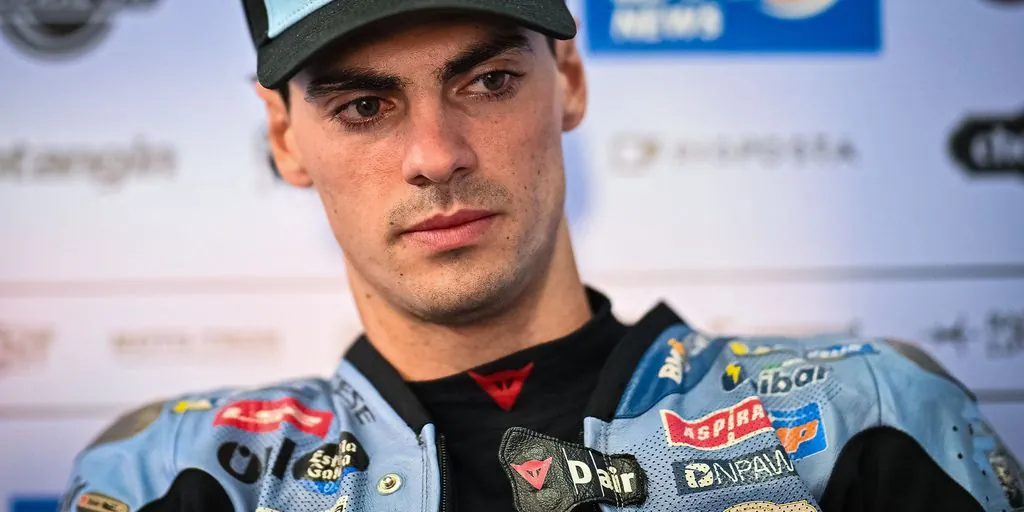
A motorcycle racer wearing racing leathers and a cap looks forward.

The Context Behind Reserve Appearances

Evaluating a rider who steps in as an injury substitute requires careful perspective, as brief cameos rarely provide an even benchmark against a regular competitor. A clear example occurred when Fermin Aldeguer Ruled Out of Malaysian GP as Iker Lecuona Deputises at Sepang after Aldeguer fractured the base of his first right metacarpal at Mandalika in 2026. Lecuona, who finished as the 2026 WorldSBK runner-up, took over the number 54 machine for both Australia and Round 19 at Sepang.

While comparing a substitute rider like Lecuona directly to the incumbent is tempting for fans, doing so ignores substantial operational imbalances. A replacement rider must rapidly adapt to unfamiliar machinery, setup baselines, and ergonomics without the benefit of preseason preparation or steady race mileage on that specific motorcycle.

Recognizing the Limitations of Direct Benchmarking

Circumstances also shift considerably between rounds, meaning pace achieved across different weekends cannot serve as an isolated measure of rider quality. Aldeguer was fighting for podium places at Mandalika prior to his crash, having also claimed a race win at that venue during the 2025 season, but matching such performance levels on short notice at entirely different circuits like Phillip Island or Sepang presents very different demands.

Because setup evolution, track characteristics, and ambient grip levels vary continually, a substitute role remains primarily a logistical necessity rather than a fair head-to-head comparison. Treating substitute results as a direct appraisal of relative rider ability overlooks the distinct handicaps inherent to temporary entries.

Official reference: Aldeguer out of Malaysian GP.

How NASCAR Restart Penalties Shape Driver Comparisons

Stock cars race through a turn on a banked oval track.

The Strategic Role of Lane Selection

Evaluating a driver's relative race pace often requires looking beyond raw lap times to see how track position was won or lost before a green flag even drops. NASCAR introduced the choose rule to let every competitor select their preferred restart line at a designated commitment point, replacing older systems where trailing drivers manipulated their pit road pacing to manipulate lane assignments. The format debuted in the July 2020 All-Star Race at Bristol Motor Speedway using an orange V marker before joining points-paying competition at Michigan International Speedway in August 2020 across all three national series, with explicit exceptions for road courses and superspeedways.

Restart Infractions and Running Order Distortions

When assessing sudden swings in head-to-head performance, understanding NASCAR choose cone penalties is essential because failing to pick a lane in time or changing lanes after the mark sends a competitor directly to the tail end of the longest line. This immediate lineup adjustment reorders the field without a timed stop, forcing a driver to fight through traffic regardless of car speed. Comparing two drivers purely on their running positions or finishing differentials after such an incident overlooks how procedural infractions, wave-arounds, and full-field line dynamics can alter the competitive baseline.

Official reference: NASCAR official news and results.

How MotoGP Ride-Through Penalties Distort Direct Rider Comparisons

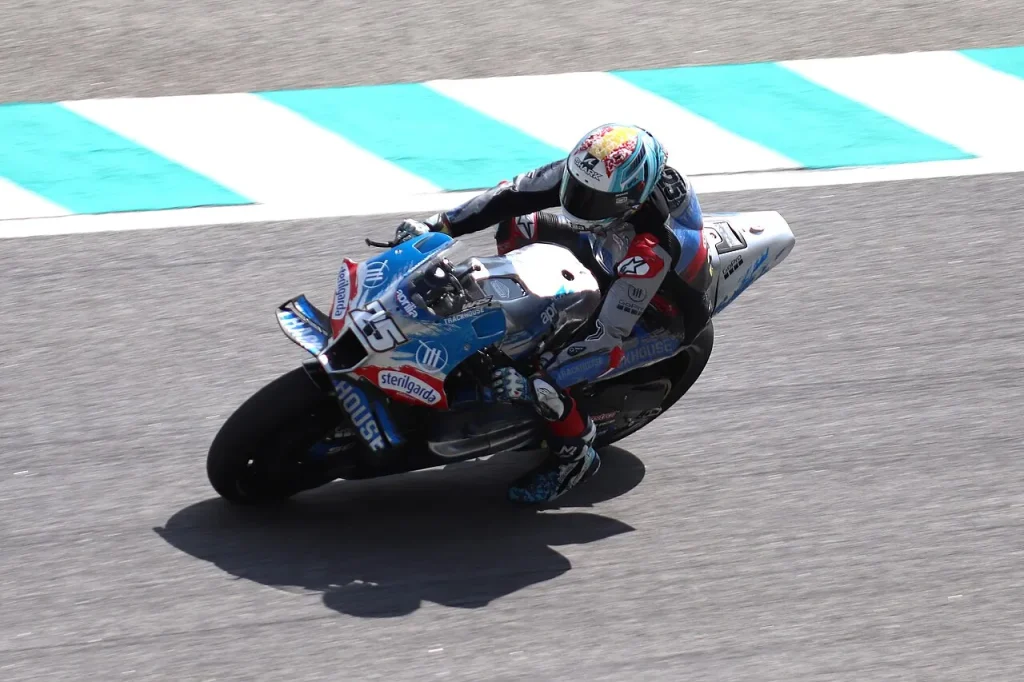
A motorcycle racer leans into a turn on a paved racing circuit beside a painted kerb.

The Strategic Illusion of Serving Deadlines

When comparing two riders battling on circuit, evaluating pure race craft becomes deceptive the moment stewards issue a pit penalty. Official communication arrives directly on a rider's dashboard while teams receive alerts on timing monitors and can show pit boards, but the penalty need not be served instantaneously. Under FIM MotoGP ride-through penalty serving rules, the rider is granted a window of three laps to enter the pit lane, with the official count beginning on the first crossing of the finish line after the dashboard message is dispatched.

Because a penalized competitor can run at full race pace for up to three laps before peeling into the pit lane, comparing intermediate lap times, sector deltas, or gap closures against rival riders during this window produces a skewed picture. If the rider ignores this deadline and fails to enter the pit lane within those three laps, stewards escalate the sanction directly to a black flag disqualification, abruptly ending any competitive comparison.

Pit Constraints and Disruption Scenarios

Executing the penalty requires riding through the pit lane without stopping while adhering strictly to the pit lane speed limit under Article 1.21.14. Breaking that speed limit triggers an escalation, typically resulting in an additional Double Long Lap penalty or another sanction at stewards' discretion. These rigid speed ceilings mean the time deficit incurred is largely structural rather than reflective of on-track pace differences between riders.

Unusual race conditions further complicate post-race performance evaluations. If a red flag interrupts a race before an active ride-through is served, regulations mandate that the competitor complete the sanction following the restart of the second part. Conversely, if Race Direction decides not to communicate the penalty or cannot signal it before the race concludes, the sanction converts into a predetermined post-race time penalty communicated to teams before the start, representing the estimated time lost during a pit traverse rather than an on-track disqualification.

Official reference: https://www.fim-moto.com/fileadmin/2026_GP_Sporting_Regulations_-_Updates_13_Sept__26.pdf?t=1792878879.

Why MotoGP Qualifying Distorts Head-to-Head Rider Comparisons

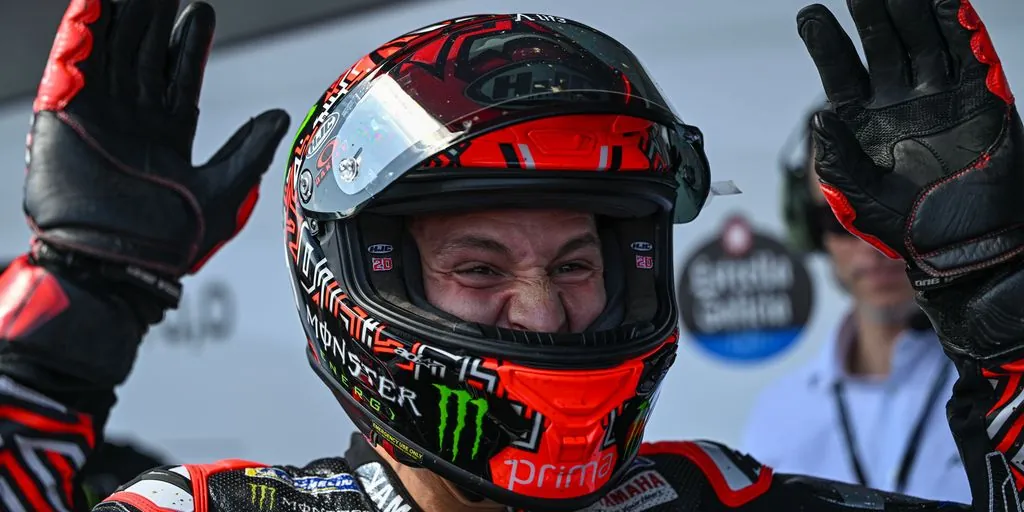
Close-up of MotoGP rider Fabio Quartararo wearing an HJC helmet with the visor raised and Monster Energy Yamaha racing gear, celebrating with both gloved hands raised in parc fermé or the pit lane.

The Knockout Format and Progression Rules

Evaluating MotoGP riders purely on single-lap head-to-head records overlooks how the weekend format divides the field. Understanding how MotoGP Q1 and Q2 qualifying work reveals why raw timing sheets do not always pit competitors against one another under matching circumstances. Direct passage to the pole shootout is determined on Friday afternoon, where only the top 10 riders in the timed 60-minute Practice session transfer immediately to Q2. The remaining competitors enter Saturday morning's 15-minute Q1 session, where just two transfer places are available to advance to the final 12-bike pole battle, while those placing third and lower are locked into starting spots from 13th back.

Variable Track Demands Between Q1 and Q2

A direct comparison between a rider eliminated in Q1 and one competing in Q2 is inherently uneven. Q1 runners face the burden of exhausting additional soft-compound tyre allocations just to reach the shootout, whereas automatic Q2 qualifiers retain fresh tyres and can monitor changing circuit grip before turning a competitive flying lap. Furthermore, because sessions take place at different times of the morning, track temperature, wind levels, and available grip evolve continually. Comparing a Q1 lap time directly to a Q2 benchmark cannot serve as an isolated measurement of rider ability.

Regulatory Hazards and Grid Compounding

Single-lap pace is also susceptible to regulatory interventions that obscure rider pace comparisons. Straying onto green-painted runoff areas results in automatic lap deletion, a penalty that cost Marc Marquez pole at the 2024 Japanese Grand Prix. Grid demotions for touring slowly on the racing line further complicate race-day comparisons. Because starting position governs both Saturday's Sprint and Sunday's Grand Prix, qualifying incidents leave riders battling turbulent air, accelerated tyre wear, and tight opening-lap traffic, heavily influencing race performance regardless of comparative baseline speed.

Official reference: How Does MotoGP™ Qualifying Work? – The Complete Guide.

Why Super GT Ballast and Fuel Flow Limits Skew Direct Driver Comparisons

A pack of GT race cars speeds down the main straight during a race.

The Illusion of Pure Head-to-Head Pace

Evaluating driver performance across a racing season often tempts fans to treat finishing order and lap times as pure reflections of individual ability. In series with equalizing handicaps, however, on-track margins frequently measure cumulative regulation penalties rather than raw driving skill. Super GT provides a clear illustration of this dynamic through performance handicaps that tie vehicle weight directly to points scored in the Drivers Championship.

Under Super GT success ballast rules, championship front-runners carry artificial deficits that cloud single-race driver evaluations. In GT300, competitors accrue two kilograms of nominal ballast per championship point scored up to a maximum cap of 100 kilograms, though the rate briefly rose to three kilograms per point during the 2020 season. When assessing whether one driver outpaced another during mid-season rounds, spectators must recognize that a car near the 100-kilogram ceiling faces fundamentally different dynamic loads than a rival running unladen after a run of poor results.

Physical Ballast Limits and Refuelling Restrictions

Understanding these comparisons requires tracking how penalties are administered beyond the cockpit. Organizers limit physical onboard ballast to 50 kilograms due to safety concerns raised by teams, which mirrored the standard used in GT500 after earlier compromises had set limits at 80 kilograms alongside Special BoP Weight. Because physical weight is capped at 50 kilograms, any remaining nominal penalty up to the 100-kilogram ceiling is converted into pit lane delays via success refuelling restrictors placed beneath the shut-off valve on the fuel rig.

This split mechanism means a leading driver's deficit might not manifest solely as cornering sluggishness or higher tire wear, but instead as extended stationary time in the pit box. Because these restrictor diameters vary according to technical bulletins calibrated against each car's Balance of Performance fuel flow baseline, race times cannot be compared linearly across teams. The handicap scales down to 1.5 kilograms per point in the penultimate round before resetting to zero for the final race, reminding observers that relative driver performance figures shift constantly under regulatory intervention.

Official reference: SUPER GT official series information and results.