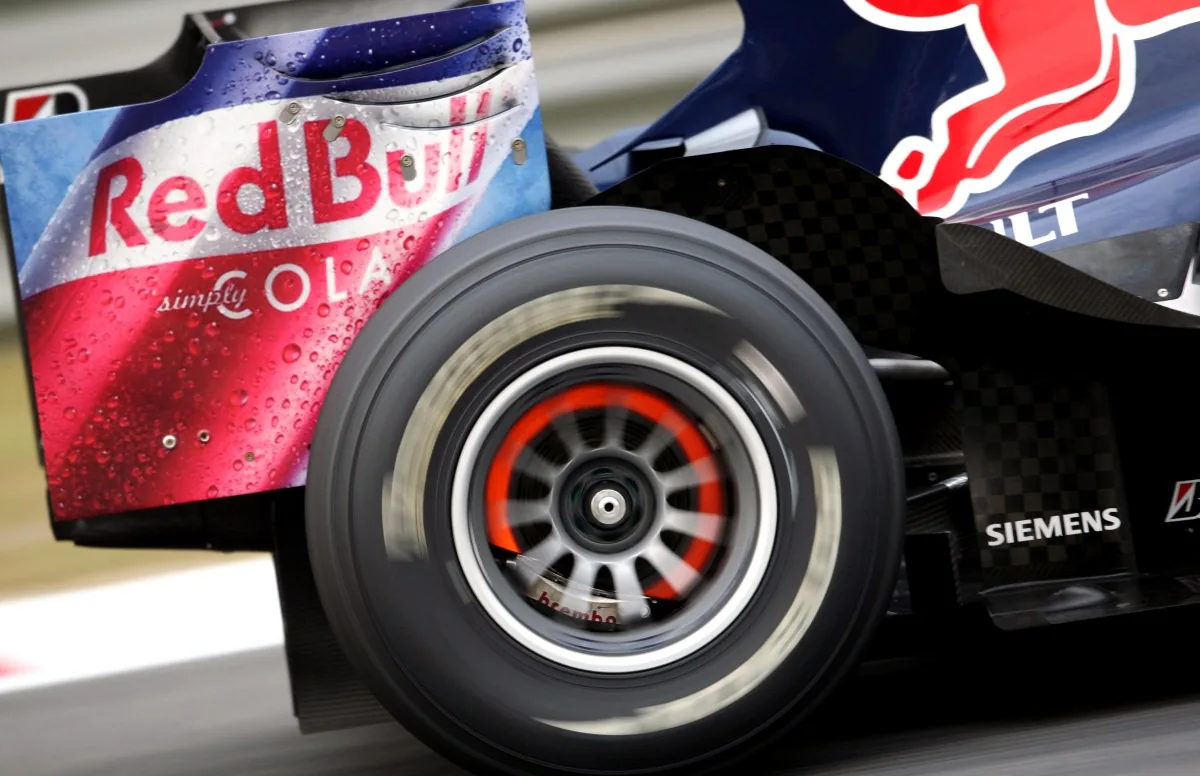
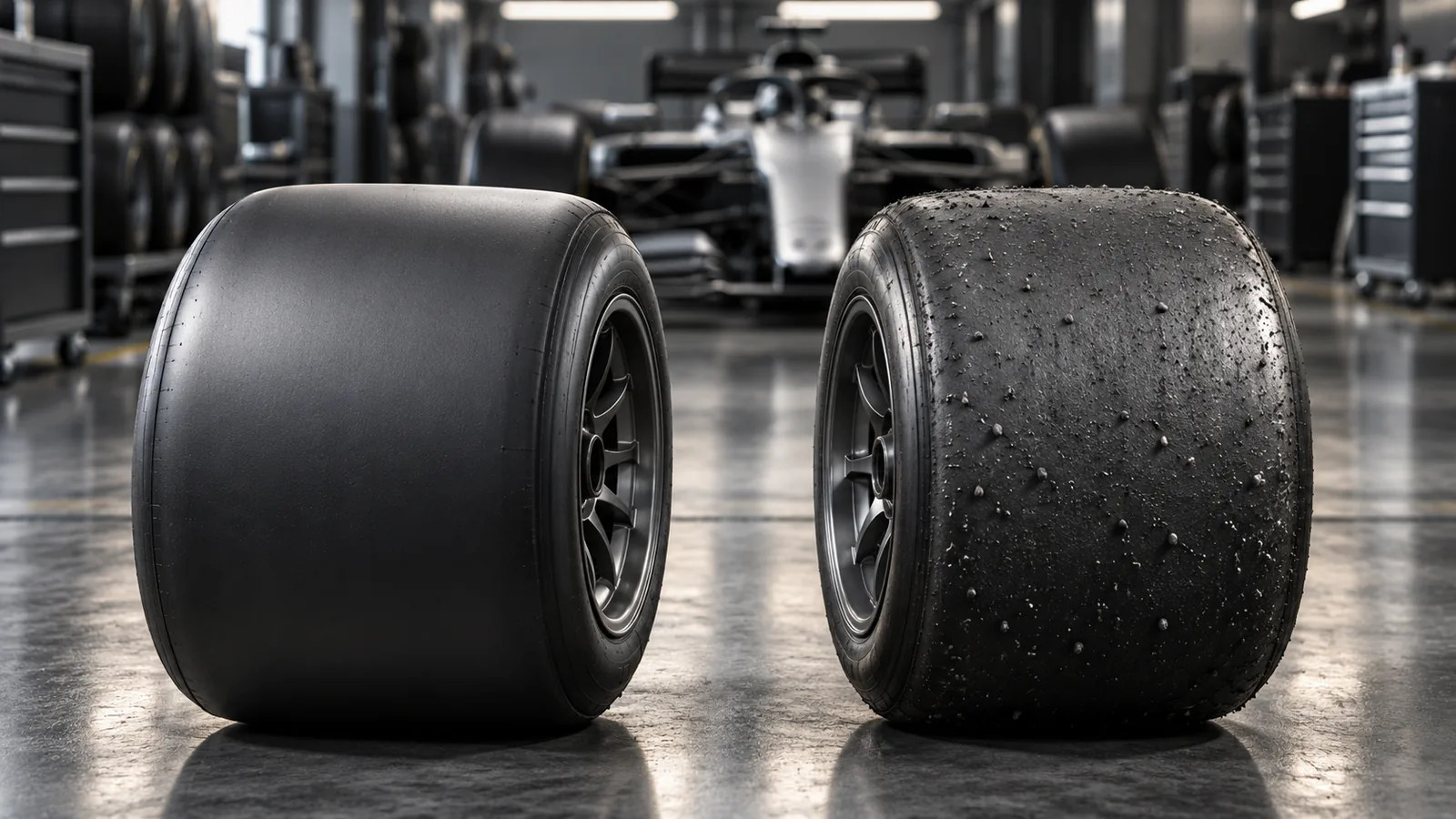
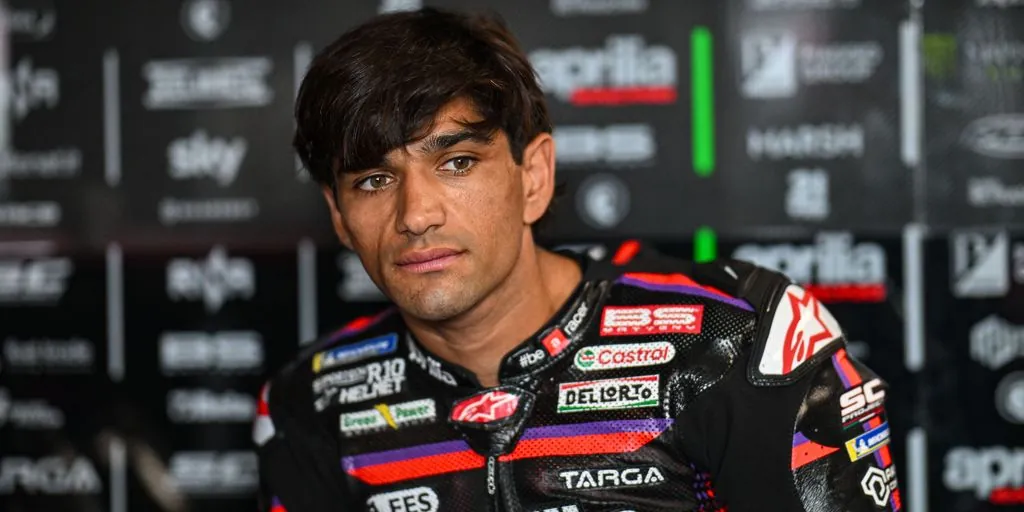
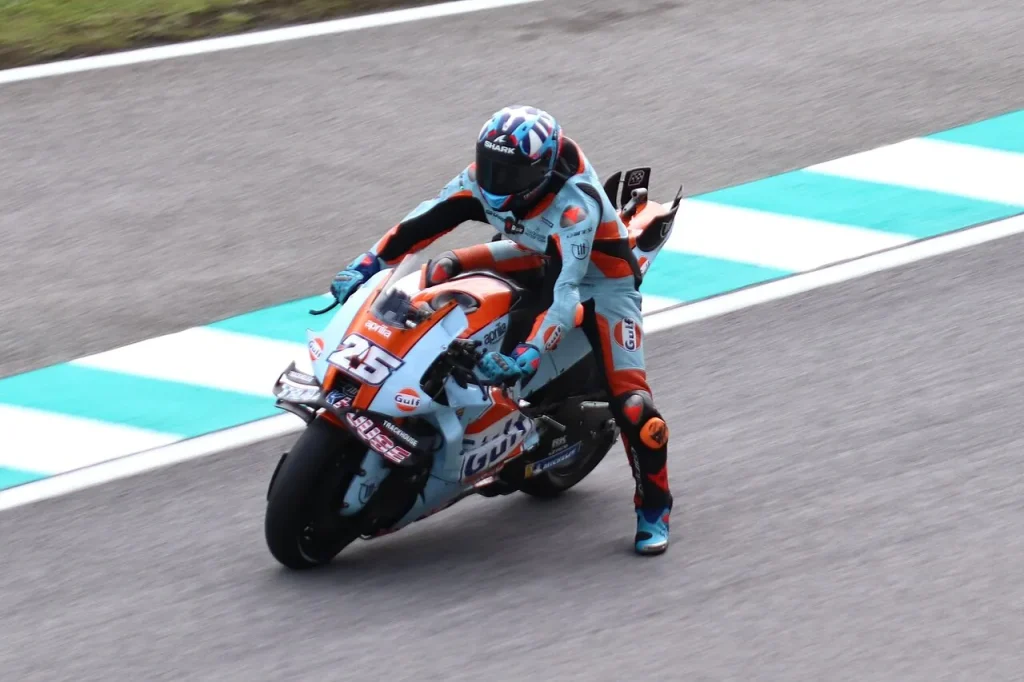
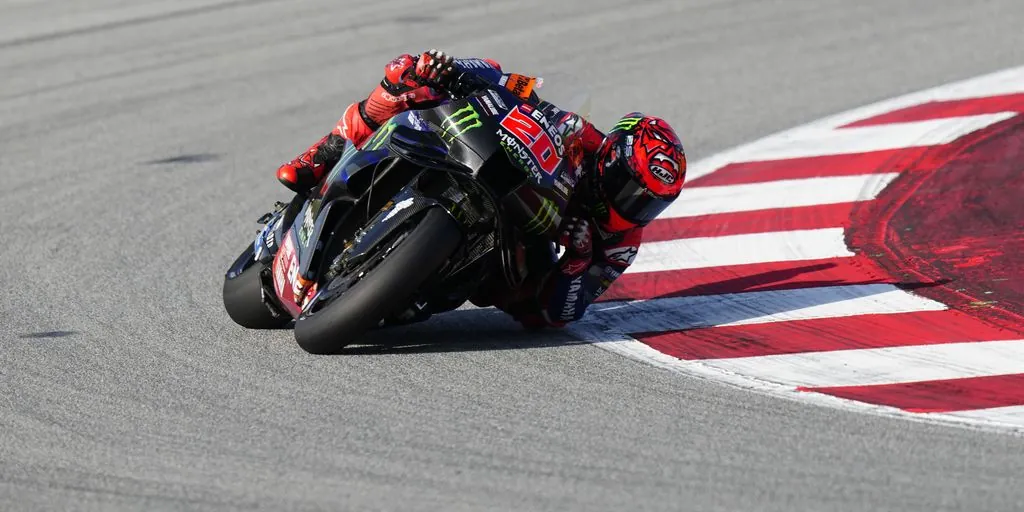
In high-downforce racing, the intense friction generated when pads clamp against carbon discs converts massive kinetic energy into thermal energy. Once these components heat up sufficiently, they emit visible light. Understanding Why F1 brake discs glow red helps clarify that a luminous rotor is a natural physical consequence of severe deceleration rather than an automatic sign of mechanical distress.
Operating Windows Versus Overheating
Carbon-carbon brakes rely on a delicate thermal window: testing accounts note that they perform poorly when cold, meaning heat retention is essential for initial bite, yet they must also shed heat via ventilation holes to prevent excessive wear or loss of efficiency. A visible red glow indicates high operating temperature, but without knowing the specific component limits and thermal dissipation rates, visual brightness alone cannot tell observers whether hardware is operating safely or nearing failure.
Mixing Sporting Infractions with Off-Track Disputes
When assessing Formula 1 drivers side by side, historical retrospectives frequently blend very different types of controversy together. A ranking such as the Top 10 Most Controversial F1 Drivers of All Time (2025 Edition) demonstrates how subjective and broad these evaluations can become. Drivers are often grouped together despite their entries spanning intentional championship collisions, sporting disqualifications, official rule changes, team politics, or personal conduct away from competition.
Because these assessments combine entirely different categories of incident, treating a controversy index as an indicator of racing conduct or driving temperament is fraught with caveats. For instance, Michael Schumacher's disqualification from the 1997 World Championship after colliding with Jacques Villeneuve represents a direct disciplinary sanction over an on-track collision. By comparison, Lewis Hamilton's inclusions in similar discussions combine a 2009 sporting disqualification for misleading race stewards with subsequent regulatory disputes regarding jewelry mandates. These events address entirely separate aspects of motorsport governance rather than a singular style of driving.
The Impact of Direct Rivalries and Team Context
Head-to-head driver comparisons also complicate how individual actions are framed over time. The persistent clashes between Ayrton Senna and Alain Prost during the 1989 and 1990 Japanese Grands Prix cemented an enduring narrative of championship conflict, including Senna's admission of deliberate retaliation in 1990. However, evaluations of Prost also incorporate paddock politics and accusations of team favoritism that do not represent formal findings. Similarly, intra-team friction, such as Nigel Mansell's fierce relationship with Nelson Piquet at Williams, demonstrates how internal operational tension often colours retrospective evaluations of aggressive racecraft.
External circumstances further obscure direct comparisons. In the disputed conclusion to the 2021 championship involving Max Verstappen, the FIA subsequently acknowledged human error regarding race direction and safety-car procedures rather than driver wrongdoing. Likewise, while Fernando Alonso benefited from the safety car triggered by Nelson Piquet Jr. at Renault in 2008, team-level scandals cannot be assumed as evidence of driver orchestration without substantiated proof. Meanwhile, Niki Lauda's withdrawal from the wet 1976 Japanese Grand Prix over safety concerns illustrates how prudent driver decisions can spark public debate alongside disciplinary matters. Reading historical driver assessments requires separating racecraft and regulations from broad controversies.
Formula 1 grand prix weekends follow a structured timetable that determines when drivers and senior team figures face the media room. Leading into the 2026 United States GP: Newey, McNish and Budkowski were announced for Friday alongside a group of six drivers scheduled across Thursday, reflecting the split between pre-arranged media duties and performance-based obligations. Prior to track running, the FIA publishes selected participant lists, whereas the later sessions on Saturday and Sunday are reserved strictly for the top three qualifiers and the podium finishers.
Understanding how these schedules operate clarifies why certain competitors appear in official briefings while others do not. Early-weekend attendance is set by official selection rather than on-track form, while post-qualifying and post-race appearances depend entirely on the final classification. Because car characteristics, strategic choices, and weekend operational programs vary significantly across teams, media appearances provide context around technical and operational challenges rather than direct measures of relative driver pace.
How Interrupted Distances Skew Performance Baselines
When comparing two MotoGP riders across a Grand Prix weekend, a stoppage can fundamentally distort the metrics fans normally rely on, such as tyre management over a full stint or raw race pace. Understanding the MotoGP red flag restart rules highlights why finishing orders from interrupted events rarely represent a straightforward head-to-head contest. Under the FIM sporting regulations, an interruption before the leader completes three-quarters of the scheduled distance normally triggers a restart. Depending on whether the stoppage occurs before or after three completed laps, the event either resets into an entirely new shortened sprint or resumes as a second part using the classification at the interruption.
Grid Resets and Hardware Variables
These regulatory mechanisms introduce major variables that complicate driver and rider comparisons. If an initial race completes fewer than three laps, it is declared void: the original starting grid is restored, pre-race grid penalties apply again, and riders who missed the original sighting lap are permitted to line up. In contrast, if three or more laps were logged before the red flag, only riders actively competing and reaching pit entry within five minutes are eligible to restart, forming up according to the calculated interrupted running order. In both scenarios, teams are permitted to change machines, perform repairs, and refuel during the pause. A rider who struggled on initial setup gains an opportunity to switch bikes, while an athlete who had built an early advantage sees their gap wiped out completely. Because of these distinct interventions, comparing overall pace or racecraft across a red-flagged Grand Prix requires separating the distinct segments rather than treating the final points table as a continuous measure of form.
Evaluating rider performance through head-to-head overtakes requires knowing where passing is legally prohibited. Under MotoGP yellow flag overtaking rules, competitors must slow down and refrain from passing across the entire marshalled sector until reaching the exact point where a green signal is displayed. Passing the physical crash or obstacle itself does not restore racing conditions. Consequently, a sudden pause in an overtaking battle or an inability to challenge an opponent across a specific micro-sector reflects regulatory restraint rather than a lack of pace or racecraft.
Self-Correction Versus Stewards Interventions
Track position changes during yellow flag periods can further obscure direct comparisons. If a rider executes an improper pass but immediately recognises the error, regulations allow them to deliberately let every overtaken competitor pass back to avoid sanction. When this sequence occurs away from broadcast cameras, standard lap charts merely show positions fluctuating. If the position is not voluntarily returned, race direction communicates an instruction via dashboard messaging, giving the rider a defined window from their next finish-line crossing to comply. Interpreting these positional shifts as raw pace advantages overlooks how compliance timing shapes track battles.
Distortions in Qualifying and Practice Timesheets
Direct lap-time comparisons between teammates in practice and warm-up sessions are particularly vulnerable to yellow flags. In non-race sessions, simply passing a waved yellow flag or lighted signal triggers automatic cancellation of that lap time, regardless of whether an overtake took place or traffic was affected. Comparing single-lap performance metrics without accounting for flag deployments can lead to flawed conclusions, as an interrupted lap reveals nothing about a rider's underlying setup or competitive ceiling.
Directly comparing two riders based solely on raw lap times or race pace often overlooks the operational disruption caused by track signals. Under standard MotoGP blue flag rules, a rider being shown the signal is informed that an overtake is imminent, but their mandatory duties shift depending on whether the action occurs in practice, pit exit, or a race. During practice runs, a rider receiving the flag must let the faster machine through and avoid disturbing competitors by cruising slowly along the racing line, whereas exiting pit lane prompts a warning post to prevent entering riders from impeding oncoming circuit traffic.
In race conditions, lapped riders must yield to every machine lapping them at the earliest opportunity, while overtakes between lapped competitors under the signal are explicitly prohibited. Because the rule defines neither a fixed corner count nor a standardized maneuver for yielding, the time conceded while moving off the preferred line introduces uncontrolled variables into comparative timing analysis.
Handling the finish line and regulatory ambiguities
The signal also produces unique scenarios at the conclusion of a grand prix. When backmarkers circulate directly ahead of the race leader crossing the stripe on the final lap, officials present both the blue and chequered flags simultaneously. This ends the leader's contest immediately, yet requires the preceding riders to circulate for one additional lap to secure their own chequered flag.
Interpreting rider performance under these constraints requires caution. While official championship guidelines note that failing to acknowledge track signals can draw penalties, regulations provide no automatic sanction specifically for blue-flag delays, nor can timing sheets isolate precisely how much pace a rider surrendered while managing traffic.
When mixed or changing weather strikes a Grand Prix, comparing rider pace becomes far more complex than reading lap times. Under MotoGP white flag bike change rules, Race Direction signals that riders are permitted to enter pit lane and switch to a secondary machine, but the regulation does not compel anyone to stop immediately. If a race is declared wet prior to the start, competitors are automatically allowed to swap machines without waiting for a white flag at all. Once permitted, whether to pit immediately, delay the stop, or remain on original tyres is left entirely to the rider.
Because teams cannot mandate the exact moment of entry—relying only on pit-board recommendations and dashboard messages—two riders on matching machinery may adopt contrasting strategies. A competitor who pits right away faces completely different track grip and tyre behaviour compared to one who stays out on slicks across drying or damp asphalt. Direct comparisons between teammates under these circumstances reflect contrasting tactical timing and changing surface risks rather than a straightforward measure of individual speed.
Pit-Lane Procedures and Operational Variables
The exchange process itself introduces operational limits that influence the final race outcome. According to the 2026 FIM Grand Prix regulations, machine swaps must take place in pit lane within specific designated positions, assisted by no more than five helmeted crew members per rider. Safe-release protocols dictate that an exiting rider must yield to incoming pit-lane traffic, guided by a designated crew member. A slight delay while waiting for passing traffic or navigating crowded pit boxes can cost crucial seconds that have nothing to do with on-track riding ability.
Furthermore, regulations permit slick-to-slick, rain-to-rain, and mixed tyre exchanges, as well as mechanical adjustments and tyre-warmer usage in the pits once changes are authorised. Riders may even swap bikes repeatedly across a flag-to-flag contest if conditions shift back and forth. Because tyre choices, setup adaptations, pit traffic, and timing variables diverge so widely, evaluating rider performance during white-flag races requires acknowledging these substantial external and strategic factors.
Immediate Safety Intervention Versus Disqualification
In motorcycle racing, a mechanical fault can create an immediate danger for both the competitor and the rest of the field. When marshals display a black flag with an orange disc alongside a specific rider number, the competitor is instructed to leave the track immediately rather than completing the lap. Unlike a disciplinary black flag that disqualifies a rider and prohibits restarting, this signal functions as a safety mandate prompted by technical concerns such as fluid leaks or structural failures.
Crucially, the intervention does not inherently mark a permanent retirement from the session. Under the MotoGP black flag orange disc rejoin rules, completing repairs in the pit box is not enough on its own; a rider can only re-enter the race once an official inspects the machine and authorises the restart.
Impact on Head-to-Head Assessments
For spectators evaluating driver or rider performance across a grand prix weekend, sudden interventions like these highlight why raw finishing positions rarely tell the complete story. A competitor forced off circuit by marshals to fix a potentially dangerous malfunction faces significant time loss that cannot be attributed to riding pace or tyre management.
Because rejoining hinges entirely on both repair turnaround and regulatory sign-off, comparing race outcomes between teammates without factoring in mandatory safety stops misrepresents relative performance. A forced track departure distorts lap charts and gaps, reminding viewers that technical interventions remain a distinct variable separate from rider ability.
When comparing race times and head-to-head rider pace, timing anomalies often come down to regulatory delays rather than pure riding performance. Under the 2026 FIM Grand Prix World Championship regulations, a rider is barred from taking a MotoGP long lap penalty under yellow flags if those flags or signals directly cover the designated penalty area. A caution elsewhere around the circuit does not prevent a rider from taking the detour, but hazards located specifically in the penalty zone force an immediate pause.
Timing Windows and Compliance Extensions
Normally, the clock to complete a penalty starts the first time a rider crosses the finish line after receiving the dashboard notification. A single Long Lap must be served within three laps, while a double Long Lap requires completion within five laps. When yellow signals render the penalty route unusable, extra compliance laps are added to these standard windows, though the governing regulations do not set a rigid mathematical formula for how that extension is calculated. Missing the deadline carries escalating consequences: failing to take a single Long Lap results in an upgrade to a double Long Lap or an alternative stewards' penalty, while missing a double Long Lap deadline leads to a pit-lane ride-through or another penalty chosen by the stewards.
Interrupted Races and Track Limits
Route execution and race stoppages introduce further variables into race evaluations. Riders are required to remain strictly within the white boundary lines of the runoff detour; stepping outside can trigger an order to repeat the penalty. If a red flag interrupts a race before an imposed penalty is carried out, its carryover depends on the leader's completed laps. If the leader completed fewer than three laps, the restart acts as a new race where pre-race penalties reset and in-race offences generally lapse unless specifically carried forward by stewards. If three or more laps were completed, unserved pre-race penalties carry into the restart. When assessing a rider's race execution, these procedural rules explain why penalty execution windows can shift without indicating a team error or hesitation on the bike.
Comparing the lap times of two drivers across a stint often begins by checking when each car visited the pit lane. That timing can be misleading because tyre age belongs to an individual set of physical tyres rather than to the pit stop itself. If a team bolts on a scrubbed set saved from practice or qualifying, the fresh stint immediately starts with laps already recorded against that rubber. Understanding why F1 tyre age does not reset after a pit stop is essential when evaluating whether a driver is genuinely struggling for pace or simply managing rubber that entered the stint with existing mileage.
Broadcast graphics track stint length and accumulated tyre usage differently depending on data provider conventions. Furthermore, fitting another set of the same compound—such as switching between two soft sets—changes the physical tyre without altering the compound specification. When assessing relative pace between teammates or rivals, a newly started stint cannot be assumed to run on brand-new rubber.
Why Lap Times Do Not Drop In Lockstep With Age
Even when two drivers show different tyre age numbers on screen, older rubber does not automatically make a car slower on a given lap. Lap time is heavily shaped by varying fuel loads, traffic, track evolution, operating temperatures, and tyre management. A freshly fitted set might require warm-up time, while an older set can stabilise or improve as track conditions develop. Pirelli notes that issues like graining are surface phenomena influenced by running conditions rather than permanent structural wear, meaning performance rarely declines in a uniform downward line.
Because degradation rates fluctuate across circuits and compounds, comparing driver ability through tyre age alone ignores critical technical nuances. The 2026 FIA Sporting Regulations define regulatory usage separately from physical grip, meaning that a set marked as used under sporting rules still retains usable performance. Any head-to-head evaluation must account for prior running history, traffic baselines, and environmental shifts rather than assuming equal machinery on identical tyre baselines.
Stage rallying releases competitors individually onto closed roads against the clock, meaning cars reach the conclusion of a timed test at maximum competition speed. To manage this safely, organizers split the conclusion of a stage into two separate operational points rather than requiring an abrupt halt on the competitive line. First comes the flying finish, where timing beams or transponders record the stage time as the car crosses flat out. Several hundred metres or roughly 200 to 500 yards down the road sits the stop control, where marshals check documentation and verify the clocking.
Signage and strict control zone rules
Competitors navigate this transition using standardized trackside boards. An advance warning with a yellow checkered flag appears roughly 100 metres before the end of the stage, followed immediately by the red checkered flag marking the timing line. Understanding the operational distinction of a rally flying finish vs stop control helps explain why crews cannot simply celebrate or pull over after setting a benchmark time. Between the two points, drivers must bring the vehicle down from high speed without locking up or overshooting the marshals.
Timekeeping duties and regulatory boundaries
At the red stop board, the car must come to a complete halt so the co-driver can present the official time card. Marshals record or stamp the finish time onto the card and align it with their log sheets, and crews must check the figures before departing. Strict sporting regulations apply across this area: reversing, parking early, or carrying out mechanical repairs is barred between the flying finish and the end-of-control marker located approximately 50 metres past the stop checkpoint.
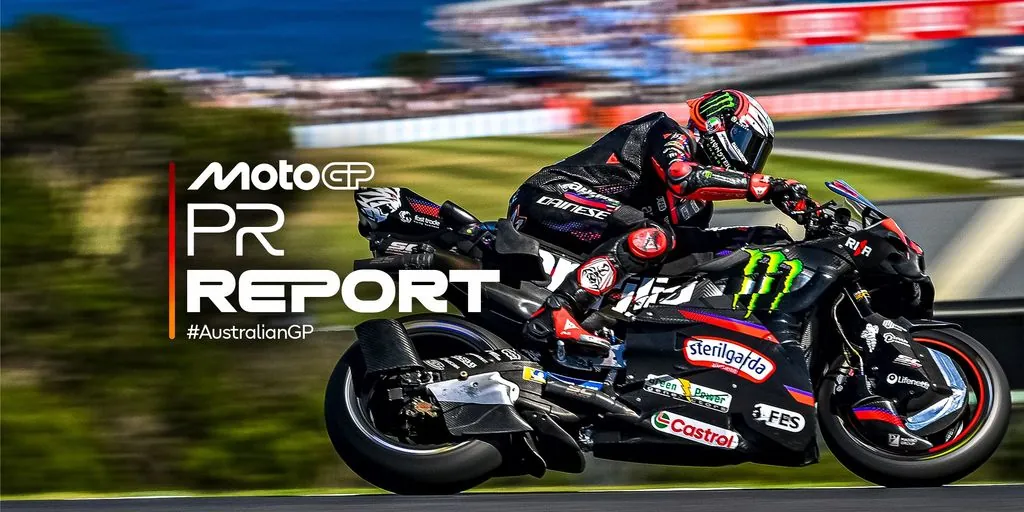
When comparing elite motorcycle racers, head-to-head track fights offer clear demonstrations of racecraft and aggression, but they also bring distinct operational variables that make direct comparison complicated. During the 2026 Australian Grand Prix Sprint at Phillip Island, Jorge Martin and Marc Marquez swapped the race lead multiple times through overtakes at Turn 1, Turn 4, and Turn 10 before an incident halted the duel. A rider leading or mounting successive attacks runs distinct risk profiles depending on track positioning, bike stability over kerbs, and defensive lines.
Evaluating performance purely by the outcome of a contested session can obscure how fine margins dictate results. After running over an inside kerb at Turn 7, Martin suffered a front-end tuck entering Turn 8, leading to a fall that resulted in a confirmed distal radius fracture and a suspected ulna fracture. The incident demonstrated how quickly momentum shifts, as reflected in the report Jorge Martin Ruled Out of Australian GP After Phillip Island Sprint Crash, which detailed both the medical ruling that sidelined Martin from Sunday's race and the resulting points swing that handed Marquez the championship lead.
Limitations of Session Results for Teammate Baselines
Looking at final finishing sheets often overlooks how different race circumstances alter rider trajectories within the same team. In that same Sprint, Aprilia Racing teammate Marco Bezzecchi recovered from 12th position at the end of the opening lap to finish fourth, whereas Martin recorded a non-finish while fighting for victory. Comparing teammate pace from such disparate race flows presents clear limitations, as recovering through pack traffic involves different tire management, slipstream effects, and risk exposures than leading out front.
When comparing rider performance across practice and qualifying sessions, headline lap charts do not always tell the full technical story. Under MotoGP track limits rules, any excursion beyond designated track boundaries that yields an advantage results in an immediate lap time deletion by timing officials. Under Article 1.15.4 of the sporting regulations, determining lap validity accounts for both the motorcycle and the rider, including situations where rider and machine separate during an incident.
Race Penalties and Decision Finality
During a Grand Prix, running off circuit requires competitors to rejoin at a designated point or without gaining an advantage, with the FIM MotoGP Stewards Panel issuing in-race sanctions if an advantage is gained. Stewards communicate these penalties via dashboard signals and timing screens, and the official lap window to serve the penalty begins on the first crossing of the finish line after transmission. Failing to serve a sanction within the allotted window prompts further escalation, though stewards also hold the authority to substitute standard time penalties where necessary.
Crucially for fans analyzing race outcomes, decisions on track boundary violations are classified as statements of fact determined by judges of fact. Because these factual determinations cannot be protested or appealed to the FIM Appeal Stewards, arbitration panels, or civil courts, regulatory intervention remains final, meaning finishing gaps and deleted laps reflect strict regulatory enforcement rather than an uninhibited comparison of pace.
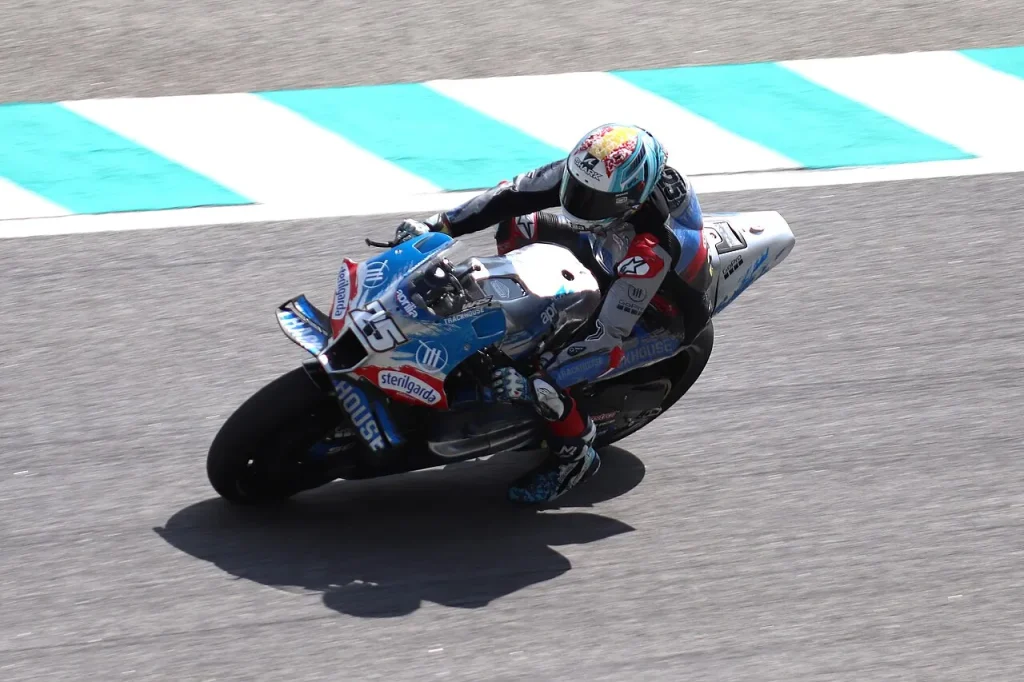
Evaluating rider performance solely by race results can misrepresent true competitiveness when underlying injuries intervene. At the 2026 Australian Grand Prix, SuperFile Trackhouse MotoGP Team rider Raul Fernandez had qualified on the second row for the 27-lap main race, demonstrating strong one-lap pace. However, unresolved discomfort from a stable fracture to his right index finger sustained two weeks prior at Mandalika, paired with soft-tissue inflammation, forced his mid-race exit during Saturday's contest.
The reality that Raul Fernandez Withdraws from Australian MotoGP After Sprint Retirement highlights why comparing rider metrics across consecutive rounds requires medical context. Forfeiting a competitive starting slot due to physical limits rather than machinery deficits demonstrates that raw finishing charts never tell the entire story of a rider's capability.
Evaluating Limitations and Future Outings
Physical attrition also affected other frontrunners at Phillip Island, such as Jorge Martin, who crashed out of second place during the Sprint and was sidelined with an injury, clearing the way for Marc Marquez to take the Sprint win and the title lead. Each incident altered the weekend dynamic independently of pure package performance.
Ahead of the subsequent round at Sepang, Fernandez was initially declared unfit but planned to travel to Malaysia for further medical assessment. When assessing rider progress or comparing teammates across grueling flyaway stretches, analysts must account for these compounding physical hurdles rather than treating race retirements or missed starts as standard deficits in form.
When comparing rider performance across a Grand Prix or Sprint, evaluating race pace requires accounting for regulatory interruptions that distort on-track battles. Under the official MotoGP jump start penalty rules, anticipating the start is penalised by the FIM MotoGP Stewards Panel with two Long Lap Penalties rather than an immediate disqualification or drive-through.
Evaluating Time Loss and Penalty Compliance
Serving a Long Lap Penalty forces a competitor off the ideal racing line through a designated circuit extension, which costs roughly two to four seconds per attempt—often around three seconds—and routinely drops the rider several positions down the order. Because the infraction requires completing this detour on two separate laps, looking solely at final race gaps or finishing positions distorts any direct comparison between teammates or rivals. Stewards notify the rider via pit boards, timing monitors, and an onboard dashboard alert reading L LAP X2; failing to serve the penalty leads to escalating sanctions such as a pit-lane ride-through penalty or an added time penalty of up to two minutes.
Evaluating sports car drivers purely by finishing positions can produce a misleading picture of competitive performance. In endurance events, official classifications are determined only after post-race timing and scoring audits review whether every competitor satisfied mandatory stint lengths. Under IMSA Standard Sporting Regulations, silver- and bronze-rated competitors face required minimum drive times, while co-drivers must achieve designated base drive times defined for each round, with proportional reductions applied if red flags pause track action.
When an entry fails to log the necessary minutes behind the wheel, series officials apply an Article 12.12 Drive-Time Penalty Order. Rather than adding time increments, this regulatory sanction drops the car behind every class finisher that complied with the rules. Consequently, official records may display a car at the very rear of its category even if it crossed the finish line among the leaders.
Historical Results and Distorted Comparisons
These post-race adjustments mean that comparing driver lineups using finishing sheets requires looking beyond the raw classifications. In GT Daytona competition at the 2019 Rolex 24 At Daytona, the second-place finishing Montaplast by Land Motorsport car and the Scuderia Corsa entry crossed the line on the provisional podium, but failed their quota audits. The resulting IMSA minimum drive time penalties demoted both entries to 22nd and 23rd in class, elevating trailing cars onto the podium hours after the checkered flag.
A similar discrepancy occurred during the 2018 IMSA Prototype Challenge event at Canadian Tire Motorsport Park, where Kyle Masson finished first on track but was moved to the rear of the class after falling short of the mandatory 40-minute stint mark. In multi-driver sports car competition, a low ranking or lost victory on paper often reflects operational stint timing rather than on-track pace.
The High-Speed Dependency on Continuous Instruction
Evaluating rally drivers against one another by stage times assumes both crews can commit to road hazards with equal visibility and preparation. Unlike circuit racing, stage rallying relies entirely on the co-driver delivering advance descriptions of blind crests, tightenings, and braking points. When that communication breaks down, comparing pure driver speed becomes impossible, as the driver is immediately forced to lift off the throttle and rely solely on forward sightlines.
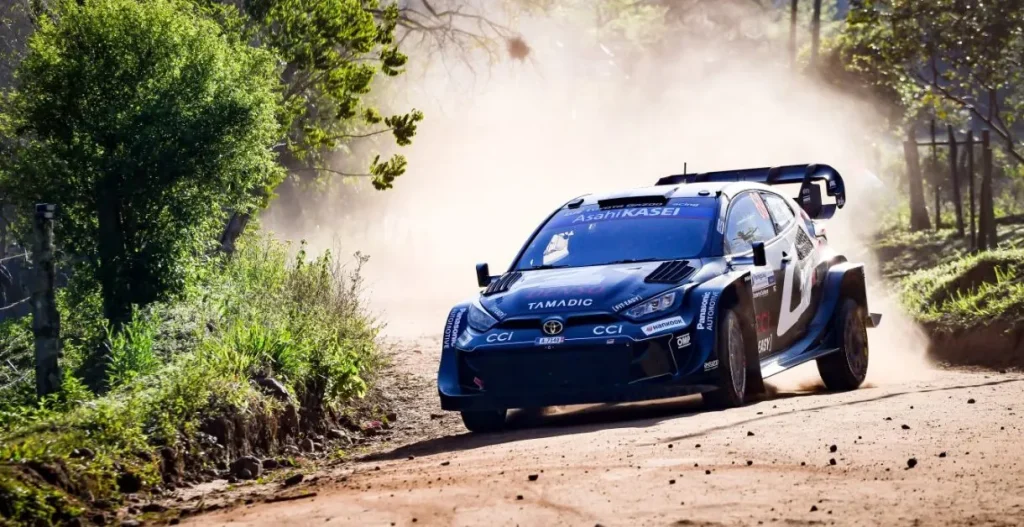
Physical disruption inside the car remains a persistent risk on violent surfaces. During the Cambyreta stage of Rally del Paraguay, M-Sport driver Josh McErlean experienced dropped notes when co-driver Eoin Treacy had his note book knocked from his hands over a hard jump landing. In incidents involving WRC lost pace notes, the driver loses the ability to anticipate what lies beyond blind brows, turning high-commitment sections into cautious, reactive driving that artificially widens the timing gap to rivals.
Reconnaissance Deficits and Incomplete Information
Time loss does not only occur when physical books are dropped; flawed or missing descriptions from reconnaissance create similar performance deficits. Low-speed recce restrictions can limit how accurately a crew maps high-speed behavior, as Thierry Neuville observed during the 2022 Rally Japan when recce limits around 60 km/h made judging full-speed line commitments difficult.
When pace details are missing or compromised, drivers must brake early and scan visually to preserve the car. At the 2026 Rally Japan, Takamoto Katsuta conceded 25.9 seconds on a single stage while managing missing pacenote data alongside earlier puncture damage. When interpreting rally splits and driver performance, such sudden drops in pace frequently reflect a breakdown in operational information rather than an underlying disparity in driver skill.
In modern Grand Prix motorcycle racing, qualifying times are often used to gauge how riders stack up against one another. However, large lap-time deficits in wet or drying sessions frequently reflect track evolution and timing windows rather than pure talent differentials. When rainfall fluctuates over the course of a single session, the grip available to one competitor rarely mirrors what another encounters just a few minutes earlier or later.
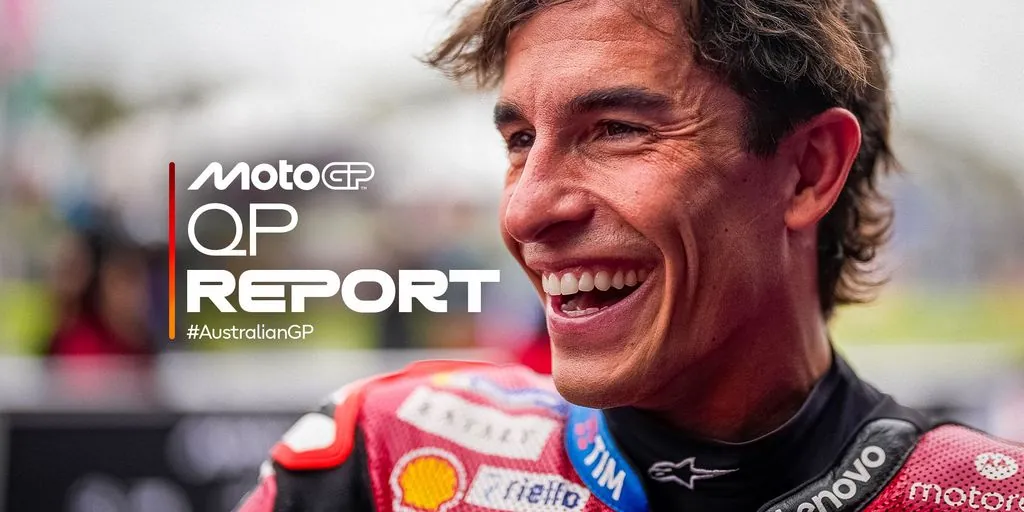
A clear example occurred during the 2026 Australian Grand Prix weekend at Phillip Island. After an early crash at Miller Corner forced a swap to a secondary bike, Marc Marquez Recovers from Turn 4 Crash to Take Australian GP Pole with a 1:34.203 lap time, putting him 1.494 seconds clear of Alex Marquez. While a gap exceeding a second is exceptionally rare in dry premier-class qualifying, changing precipitation across the session meant competitors were dealing with variable asphalt dampness throughout their respective flying efforts.
Equipment Changes and Running Sequence
Direct comparisons across a qualifying grid are further complicated by the circumstances each garage faces under pressure. Having to switch to a spare motorcycle, adapting to tire temperature drops during delays, and negotiating traffic all shape the final order. Johann Zarco finished third after progressing through Q1, while riders like Jorge Martin salvaged fourth on a rapidly shifting circuit.
Because Phillip Island saw rain return during the decisive runs, evaluating individual pace strictly by sector margins or final classification overlooks how heavily environmental timing influences lap execution. Recognizing these shifting variables prevents fans from misinterpreting a fluctuating qualifying session as a permanent benchmark between riders.
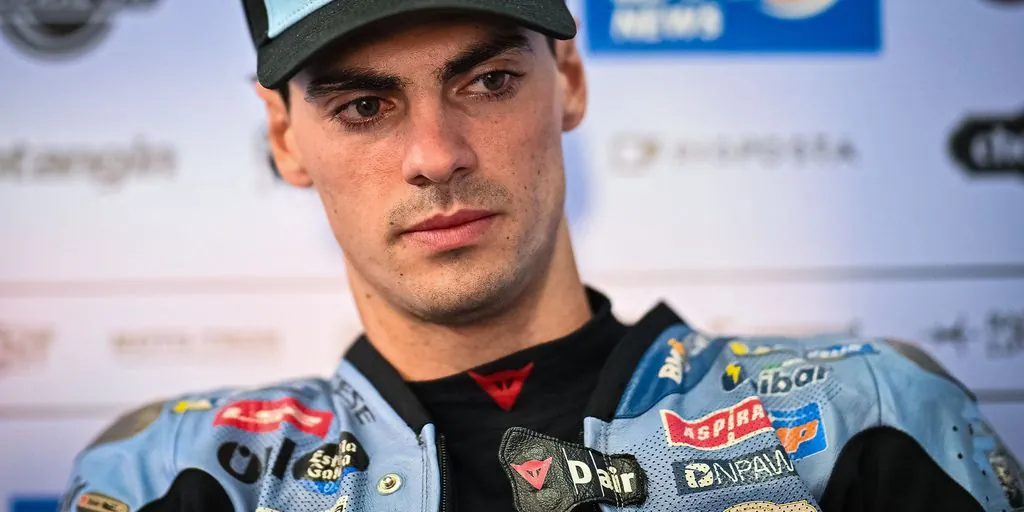
Evaluating a rider who steps in as an injury substitute requires careful perspective, as brief cameos rarely provide an even benchmark against a regular competitor. A clear example occurred when Fermin Aldeguer Ruled Out of Malaysian GP as Iker Lecuona Deputises at Sepang after Aldeguer fractured the base of his first right metacarpal at Mandalika in 2026. Lecuona, who finished as the 2026 WorldSBK runner-up, took over the number 54 machine for both Australia and Round 19 at Sepang.
While comparing a substitute rider like Lecuona directly to the incumbent is tempting for fans, doing so ignores substantial operational imbalances. A replacement rider must rapidly adapt to unfamiliar machinery, setup baselines, and ergonomics without the benefit of preseason preparation or steady race mileage on that specific motorcycle.
Recognizing the Limitations of Direct Benchmarking
Circumstances also shift considerably between rounds, meaning pace achieved across different weekends cannot serve as an isolated measure of rider quality. Aldeguer was fighting for podium places at Mandalika prior to his crash, having also claimed a race win at that venue during the 2025 season, but matching such performance levels on short notice at entirely different circuits like Phillip Island or Sepang presents very different demands.
Because setup evolution, track characteristics, and ambient grip levels vary continually, a substitute role remains primarily a logistical necessity rather than a fair head-to-head comparison. Treating substitute results as a direct appraisal of relative rider ability overlooks the distinct handicaps inherent to temporary entries.
Evaluating a driver's relative race pace often requires looking beyond raw lap times to see how track position was won or lost before a green flag even drops. NASCAR introduced the choose rule to let every competitor select their preferred restart line at a designated commitment point, replacing older systems where trailing drivers manipulated their pit road pacing to manipulate lane assignments. The format debuted in the July 2020 All-Star Race at Bristol Motor Speedway using an orange V marker before joining points-paying competition at Michigan International Speedway in August 2020 across all three national series, with explicit exceptions for road courses and superspeedways.
Restart Infractions and Running Order Distortions
When assessing sudden swings in head-to-head performance, understanding NASCAR choose cone penalties is essential because failing to pick a lane in time or changing lanes after the mark sends a competitor directly to the tail end of the longest line. This immediate lineup adjustment reorders the field without a timed stop, forcing a driver to fight through traffic regardless of car speed. Comparing two drivers purely on their running positions or finishing differentials after such an incident overlooks how procedural infractions, wave-arounds, and full-field line dynamics can alter the competitive baseline.
When comparing two riders battling on circuit, evaluating pure race craft becomes deceptive the moment stewards issue a pit penalty. Official communication arrives directly on a rider's dashboard while teams receive alerts on timing monitors and can show pit boards, but the penalty need not be served instantaneously. Under FIM MotoGP ride-through penalty serving rules, the rider is granted a window of three laps to enter the pit lane, with the official count beginning on the first crossing of the finish line after the dashboard message is dispatched.
Because a penalized competitor can run at full race pace for up to three laps before peeling into the pit lane, comparing intermediate lap times, sector deltas, or gap closures against rival riders during this window produces a skewed picture. If the rider ignores this deadline and fails to enter the pit lane within those three laps, stewards escalate the sanction directly to a black flag disqualification, abruptly ending any competitive comparison.
Pit Constraints and Disruption Scenarios
Executing the penalty requires riding through the pit lane without stopping while adhering strictly to the pit lane speed limit under Article 1.21.14. Breaking that speed limit triggers an escalation, typically resulting in an additional Double Long Lap penalty or another sanction at stewards' discretion. These rigid speed ceilings mean the time deficit incurred is largely structural rather than reflective of on-track pace differences between riders.
Unusual race conditions further complicate post-race performance evaluations. If a red flag interrupts a race before an active ride-through is served, regulations mandate that the competitor complete the sanction following the restart of the second part. Conversely, if Race Direction decides not to communicate the penalty or cannot signal it before the race concludes, the sanction converts into a predetermined post-race time penalty communicated to teams before the start, representing the estimated time lost during a pit traverse rather than an on-track disqualification.
Evaluating MotoGP riders purely on single-lap head-to-head records overlooks how the weekend format divides the field. Understanding how MotoGP Q1 and Q2 qualifying work reveals why raw timing sheets do not always pit competitors against one another under matching circumstances. Direct passage to the pole shootout is determined on Friday afternoon, where only the top 10 riders in the timed 60-minute Practice session transfer immediately to Q2. The remaining competitors enter Saturday morning's 15-minute Q1 session, where just two transfer places are available to advance to the final 12-bike pole battle, while those placing third and lower are locked into starting spots from 13th back.
Variable Track Demands Between Q1 and Q2
A direct comparison between a rider eliminated in Q1 and one competing in Q2 is inherently uneven. Q1 runners face the burden of exhausting additional soft-compound tyre allocations just to reach the shootout, whereas automatic Q2 qualifiers retain fresh tyres and can monitor changing circuit grip before turning a competitive flying lap. Furthermore, because sessions take place at different times of the morning, track temperature, wind levels, and available grip evolve continually. Comparing a Q1 lap time directly to a Q2 benchmark cannot serve as an isolated measurement of rider ability.
Regulatory Hazards and Grid Compounding
Single-lap pace is also susceptible to regulatory interventions that obscure rider pace comparisons. Straying onto green-painted runoff areas results in automatic lap deletion, a penalty that cost Marc Marquez pole at the 2024 Japanese Grand Prix. Grid demotions for touring slowly on the racing line further complicate race-day comparisons. Because starting position governs both Saturday's Sprint and Sunday's Grand Prix, qualifying incidents leave riders battling turbulent air, accelerated tyre wear, and tight opening-lap traffic, heavily influencing race performance regardless of comparative baseline speed.
Evaluating driver performance across a racing season often tempts fans to treat finishing order and lap times as pure reflections of individual ability. In series with equalizing handicaps, however, on-track margins frequently measure cumulative regulation penalties rather than raw driving skill. Super GT provides a clear illustration of this dynamic through performance handicaps that tie vehicle weight directly to points scored in the Drivers Championship.
Under Super GT success ballast rules, championship front-runners carry artificial deficits that cloud single-race driver evaluations. In GT300, competitors accrue two kilograms of nominal ballast per championship point scored up to a maximum cap of 100 kilograms, though the rate briefly rose to three kilograms per point during the 2020 season. When assessing whether one driver outpaced another during mid-season rounds, spectators must recognize that a car near the 100-kilogram ceiling faces fundamentally different dynamic loads than a rival running unladen after a run of poor results.
Physical Ballast Limits and Refuelling Restrictions
Understanding these comparisons requires tracking how penalties are administered beyond the cockpit. Organizers limit physical onboard ballast to 50 kilograms due to safety concerns raised by teams, which mirrored the standard used in GT500 after earlier compromises had set limits at 80 kilograms alongside Special BoP Weight. Because physical weight is capped at 50 kilograms, any remaining nominal penalty up to the 100-kilogram ceiling is converted into pit lane delays via success refuelling restrictors placed beneath the shut-off valve on the fuel rig.
This split mechanism means a leading driver's deficit might not manifest solely as cornering sluggishness or higher tire wear, but instead as extended stationary time in the pit box. Because these restrictor diameters vary according to technical bulletins calibrated against each car's Balance of Performance fuel flow baseline, race times cannot be compared linearly across teams. The handicap scales down to 1.5 kilograms per point in the penultimate round before resetting to zero for the final race, reminding observers that relative driver performance figures shift constantly under regulatory intervention.
Directly comparing premier-class riders across a season assumes both contenders can consistently extract performance under competitive race conditions. When an incident removes one contender from the grid, points deficits can shift drastically without reflecting a persistent difference in machinery or outright pace. During the Australian Grand Prix weekend in October 2026, Jorge Martin crashed on lap eight of the Phillip Island Sprint at Turn 8 while disputing the lead with Ducati Lenovo Team rider Marc Marquez. The fall handed Marquez the championship lead and left Martin ten points adrift with 173 points still available through the Valencia finale.
Initial examinations at the track medical centre suggested potential injuries to both the radius and ulna, but a subsequent CT scan clarified that the only detected damage was a non-displaced fracture of the distal radius. Aprilia Racing determined that Jorge Martin Will Not Return to Spain After Distal Radius Fracture, opting instead to have him receive care locally to avoid the physical toll of long-distance travel while he was ruled unfit for the Sunday Grand Prix. Evaluating head-to-head records across such a stretch requires separating missed opportunities caused by recovery timelines from measurable gaps in on-track execution.
Qualifying timing screens often tempt fans to rank rider performance directly by lap times, yet external variables routinely distort pure one-to-one pace evaluations. During the 2026 Australian Grand Prix qualifying session at Phillip Island, the news that Manuel Gonzalez Claims Australian GP Moto2 Pole for 100th Grand Prix came alongside significant mid-session disruption. A heavy Turn 8 crash by provisional pole-sitter Senna Agius brought out yellow flags with barely four minutes remaining, directly compromising flying laps for several riders behind while those ahead enjoyed untroubled asphalt.
Because riders cannot improve through yellow flag zones without risking lap cancellations or penalties, track positioning creates arbitrary divides. Manuel Gonzalez and Barry Baltus cleared the sector before the incident neutralized running, whereas contenders such as Izan Guevara, David Alonso, Taiyo Furusato, and Filip Salac encountered spoiled laps during their scheduled peak grip windows.
Slipstream Dynamics and Compressed Margins
A further complication in comparing single-lap pace is the massive aerodynamic benefit of drafting on high-speed layouts. Filip Salac subsequently claimed third on the grid by securing a slipstream behind Guevara, demonstrating how an assist from another machine can vault a rider up the order rather than purely individual machine control.
With the top ten riders separated by only 0.212 seconds, minor circumstantial assists and timing interruptions dwarf the fractional differences between competitors. While Gonzalez secured pole with a 1:30.122 and Guevara ended up sixth despite finishing only 0.155 seconds adrift, their starting slots reflected track timing and tactical positioning as much as inherent one-lap capability.
Head-to-head battles on track often tempt fans to draw sweeping conclusions about which competitor possesses superior individual skill. However, evaluating rider performance solely through wheel-to-wheel exchanges overlooks critical mechanical and situational disparities. When analyzing high-stakes title fights, observing how machinery interacts with circuit dynamics reveals why track position changes are rarely a straightforward test of raw talent alone.
Mechanical Differences and the Context of Phillip Island 2026
During the 2026 Australian Grand Prix weekend, reporting showed how Marc Marquez Takes Title Lead as Martin Crashes Out in Phillip Island Sprint while riding differing machinery. Marc Marquez competed aboard the factory Ducati Lenovo machine, whereas Jorge Martin campaigned an Aprilia. Across their multi-lap exchange, Martin repeatedly attacked at Turn 1 and Turn 4, while Marquez capitalized on line preservation through Turn 2 and defended under braking. Assessing these maneuvers as an unclouded gauge of talent ignores how distinct chassis characteristics handle kerb strikes and front-end stability, evidenced when Martin unsettled his bike on the Turn 7 kerb prior to his Lap 8 fall.
External Influences Beyond Rider Control
Final results can also be shaped by operational regulations and environmental variables rather than rider input alone. At the same event, intermittent rain threatened the closing stages, and an eight-second tyre pressure penalty altered Ai Ogura's finishing position post-race. Such regulatory and atmospheric factors demonstrate that finishing orders and head-to-head outcomes reflect a complex mix of machine behavior, setup compliance, and risk management rather than isolated rider capability.
Directly comparing rider capability using Friday practice times requires significant caution, as single-lap standings reflect specific session timing and machinery traits rather than a settled hierarchy. A notable example occurred at Phillip Island when Marco Bezzecchi Tops Friday MotoGP Practice at Phillip Island as Aprilias Surge, leading a session where Aprilia RS-GP machinery took four of the top five positions alongside Trackhouse riders Raul Fernandez in second and Ai Ogura in fourth, plus Jorge Martin in fifth. While Marco Bezzecchi set the benchmark 1’26.775, evaluating overall competitive margins across different bikes is rarely straightforward.
Ducati Lenovo Team rider Marc Marquez slotted into third as the only non-Aprilia in that top group after posting the session's first sub-1’27 lap, before an issue during a post-session practice start cut his running short. When a specific manufacturer locks out multiple leading places, lap times often highlight how effectively a package interacts with circuit characteristics during targeted time attacks, rather than isolating driver ability.
The Disruption Factor and Tight Margins
Session context also distorts pure comparisons between competitors. The Phillip Island afternoon practice featured multiple stoppages, including red flags for crashes involving Jack Miller and a collision between Bezzecchi and Alex Marquez, followed by another red flag for wildlife on the track. Interruptions fragment practice programs and prevent every team from executing equivalent runs under stable track temperatures.
Furthermore, small margins can mask relative potential. While Alex Marquez secured sixth despite a late tumble, factory and satellite counterparts were separated by tiny fractions, with Enea Bastianini edging Pedro Acosta by just 0.026s for seventh. Across the field, 14 riders finished within a single second, pushing proven race winners like Francesco Bagnaia, Fabio Quartararo, and Brad Binder into Qualifying 1. These compressed gaps demonstrate why practice times indicate session execution under variable conditions rather than definitive driver performance rankings.
Understanding the Five-Lap Window and Execution Limits
Evaluating head-to-head rider pace during a Grand Prix requires separating pure lap time potential from regulatory time losses. Looking closely at how MotoGP double long lap penalties are served reveals why standard timing sheets can be deceptive. When FIM MotoGP Stewards issue a double penalty, the rider is notified via dashboard display, and the official compliance count begins only upon crossing the finish line following that signal. The rider must complete the elongated asphalt runoff route on two separate laps within a strict five-lap window.
While serving the loops, competitors face rigid constraints that directly impact pacing. Riders cannot exceed the painted white boundary lines, are forbidden from overtaking within the corridor, and bear full responsibility for leaving and re-joining the racing line safely without disrupting others. Because this detour extends circuit distance across two individual laps, comparing raw segment times between teammates or rivals during this phase does not reflect baseline machinery performance or outright rider capability.
Track Disruptions and Procedural Escalations
Strategic timing further alters how these penalties affect a rider's race progression. If caution signals or yellow flags cover the designated penalty corner, entering the lane is prohibited. Each unusable lap adds an extension to the five-lap compliance period, stretching out when the time loss occurs. Furthermore, should a race be interrupted before completion of the loops, the penalty carries over into the restart or converts into an alternative sanction determined by the stewards.
Ignoring or failing to clear both loops within the five-lap timeline triggers severe escalation rather than a simple end-of-race adjustment. Noncompliance results in an order to perform a pit lane ride-through, and failing to execute that ride-through within three laps leads to a black flag disqualification. Automatic time penalties are reserved for instances where the organisation could not signal the penalty before the race concluded, demonstrating that regulatory delays must be factored carefully into any post-race driver analysis.
Evaluating co-drivers sharing a single sports car requires looking far beyond raw on-track lap times. In series like IMSA, team members must navigate strict endurance racing driver change rules that restrict who can assist in the pit box and when they can enter it. No crew member is permitted to step over the pit wall until the car is entirely stationary in its stall, and exactly one designated assistant is allowed over the wall to help with the cockpit swap.
Compromises Between Co-Drivers
Because only a single helper is permitted to assist with safety belts, drink tubes, air hoses, and custom seat inserts, differences in driver height and physical build introduce practical trade-offs. If teammates do not share identical seating ergonomics, installing inserts takes valuable seconds. When a team attempts a rapid pit sequence—such as taking only two fresh tires rather than four—a cockpit swap that exceeds 25 to 30 seconds can force the car to sit idle or leave a driver rushed into an imperfect seating position.
Interpreting Performance Across Shared Stints
A driver who takes over during a compromised stop may begin their stint managing suboptimal ergonomic adjustments or heightened initial stress after leaping into a live pit lane. Consequently, pace variations between teammates often reflect pit-stop timing pressures, equipment connections, and ergonomics rather than a clean comparison of underlying driving skill.
Evaluating stage times between World Rally Championship drivers often leads fans to draw direct comparisons regarding driving skill, yet equipment limits introduce vital variables that blur the picture. Competitors do not operate with limitless fresh rubber. For four-wheel-drive entries, every tyre must come from the designated tyre partner, which is Hankook for the 2026 season. Scrutineers closely monitor strict event quotas, meaning a driver who drops time on an afternoon loop may simply be managing older compound sets rather than falling behind on outright pace.
Tracking Systems and Entry Registration
To ensure compliance, technical regulations rely on high-precision tracking before and during an event. Radio Frequency Identification (RFID) chips are embedded directly into tyre structures before moulding and vulcanisation, accompanied by external barcodes. Having this WRC tyre marking explained clarifies how officials prevent teams from introducing rogue tyres or borrowing from rival squads: P1 drivers have specific tyre barcodes formally registered to their cars, while Junior WRC barcode lists are likewise submitted to the FIA Technical Delegate.
Operational Caveats Along the Route
Tyre scanning occurs at designated marking zones placed at the exits of service parks, Tyre Fitting Zones, and Remote Service Zones before cars head onto road sections. Complete wheels cannot simply be shuffled along the route; they may only be loaded or removed in authorised zones, and spare wheels must remain on board between designated checkpoints. Because tyre degradation, strategic compound compromises, and spares handling heavily influence stage performance, comparing two drivers over a single test rarely represents an isolated test of driving ability.
Comparing rider performance in changing weather often reveals more about tactical decisions than relative riding pace. In MotoGP flag-to-flag events, competitors are permitted to switch between their two allocated machines without a regulatory cap once officials display white flags or declare wet conditions. Because each pit stop requires navigating the pit lane at a restricted 60 km/h, the time lost in transit exerts a massive influence on the final running order.
Evaluating riders directly across such events is complicated by these timing variables. At Misano in 2024, for example, Jorge Martin pitted during brief rainfall for rain tyres and subsequently returned to pit lane for slicks when the precipitation stopped, finishing 15th, whereas Marc Marquez stayed out on slicks to win. In such dynamic circumstances, MotoGP multiple bike changes demonstrate how differing tyre assessments and tactical gambles alter finishing positions, meaning finishing gaps cannot be viewed as a baseline measure of individual rider speed.
Operational Variables and Mandatory Stops
Even when pit-stop timing appears straightforward, mechanical procedures and outside constraints influence comparative results. Riders must step from one running machine to another held ready by their pit crew, all while adhering to the pit-lane speed marker limits or facing penalties such as a double Long Lap. Beyond optional weather gambles, exceptional circumstances like the 2013 Australian Grand Prix at Phillip Island saw race direction mandate a bike swap across laps 9 or 10 due to tyre durability concerns on a resurfaced circuit. An entry miscalculation led to Marc Marquez receiving a disqualification, handing Jorge Lorenzo the win. Whether driven by emergency safety rulings or volatile track conditions, bike changes introduce strategic and operational hurdles that limit straightforward comparisons between competitors.
Motorsport sessions require strict safety infrastructure before riders can take to the track, including immediate medical evacuation capabilities. Under FIM Grand Prix World Championship Regulations, an air medical helicopter is normally required on site to ensure rapid transit to a designated hospital, typically within a 20-minute flight window. The aircraft must carry resuscitation equipment, qualified medical crew, and an experienced pilot. When weather compromises flight visibility, racing cannot simply carry on without contingency coverage.
Road Transfer Contingencies and Delays
Regulations provide an alternative pathway where patient transfer may proceed by road ambulance if agreed upon by key medical officials, generally provided the hospital is within a 45-minute drive. However, if conditions ground the aircraft and road transit is either unviable or not formally authorised, officials must hold or halt running. Such was the situation when the MotoGP Australian GP Delayed as Reduced Visibility Grounds Medical Helicopter incident forced organizers at Phillip Island to pause Sunday activity while waiting for safe transport conditions to be verified, illustrating how external medical logistics directly dictate track green flags.
When comparing the performance of drivers sharing a car or competing across stints in sports car racing, overall in-and-out times often cloud raw track pace. Under IMSA WeatherTech SportsCar Championship regulations, every competitor operates under a uniform 60 km/h cap along the pit lane. A driver who exceeds this speed threshold faces a drive-through penalty, which forces them to travel the entire length of the lane at regulated speed without stopping for tyres, fuel, or repairs. Repeated noncompliance or ignoring directions from race control can escalate to a black flag, requiring the car to report directly to the pits.
Distinguishing Pit Execution from Pure Driving Pace
Because the governing body strictly applies the standard IMSA pit lane speed limit rules to all classes, speed differences inside pit lane transit cannot be attributed to a driver simply choosing to push harder under green-flag conditions. Safety protocols dictate that crew members cannot step over the pit wall until the car is fully stationary, and servicing allows only four primary crew members alongside regulated personnel assisting during driver rotations. Apparent time lost during an exchange may reflect execution variables in the box rather than on-track performance, reminding observers that total elapsed stint deltas are not a direct measure of driving ability alone.
Evaluating drivers solely by total victories on turning circuits overlooks how drastically the Cup Series schedule has changed across generations. In an all-time ranking published in June 2026, Jeff Gordon headed the tally with nine victories, closely followed by Tony Stewart and Shane van Gisbergen at eight, and Chase Elliott at seven. Yet Gordon and Stewart compiled their numbers during an era when the Cup schedule relied almost entirely on just two stops: Sonoma and Watkins Glen. By contrast, newer contenders have contended across an expanding catalog of venues, meaning direct head-to-head win counts compare specialists operating under very different scheduling opportunities.
This contextual gap becomes clearer when looking at the list of top 10 NASCAR Cup Series drivers with the most road course wins, which actually features eleven names due to ties. Early icons like Bobby Allison accumulated all six of his recorded wins at a single track, Riverside, as did Darrell Waltrip with his five victories. Meanwhile, contemporary drivers such as Elliott and van Gisbergen have taken checkered flags at rovals, temporary street circuits like Chicago, and purpose-built facilities like Road America and Circuit of the Americas. A street course or modern roval presents technical and operational demands that simply did not exist on the calendars faced by earlier competitors.
Venue specialization versus broad versatility
Looking at circuit breakdown also illustrates how misleading an aggregated number can be if treated as a comprehensive test of ability. Ricky Rudd and Rusty Wallace each earned six wins split evenly across Riverside, Watkins Glen, and Sonoma, showing longevity and adaptability across distinct track profiles. In contrast, Tim Richmond collected four of his five wins at Riverside, while Martin Truex Jr. notched four of his five victories at Sonoma.
Because equipment, tire construction, vehicle design, and track layouts evolve significantly over decades, comparing drivers across eras cannot serve as an uncompromised measure of individual talent. An aggregated win list reflects who excelled at the specific tracks available during their competitive window rather than an absolute, equal-footing ranking of road-racing mastery.
A photo finish at Indianapolis Motor Speedway is often treated as proof of two drivers operating at virtually identical levels. However, evaluating driver comparisons through finishing times alone overlooks the circumstances that compress those gaps. Looking across the top 10 closest finishes in Indianapolis 500 history, the tightest outcomes have frequently been shaped by late-race interruptions and varied track situations rather than steady, long-run parity.
A primary factor in modern close finishes is the late-race restart. In 2026, Felix Rosenqvist defeated David Malukas by 0.0233 seconds following a one-lap sprint, and in 2023, Josef Newgarden edged Marcus Ericsson by 0.097 seconds under similar one-lap shootout conditions following a red flag. These brief dashes bunch the field artificially and place an enormous premium on slipstreaming and single-moment timing, rather than representing an evenly balanced contest over a full stint.
Mechanical Struggles Versus Drafting Duels
Finishing deltas also mask drastically different chassis and handling dynamics across the cars involved. In the 1982 race, Gordon Johncock led Rick Mears by over 11 seconds after the final pit sequence, but a worsening handling problem on Johncock's car allowed Mears to close rapidly on the final lap, finishing just 0.160 seconds behind. That narrow margin arose from surviving a severe equipment imbalance rather than an equal wheel-to-wheel contest from start to finish.
By contrast, races decided in the closing yards often turn on aerodynamic drafting mechanics. In 1992, Al Unser Jr. held off Scott Goodyear by 0.043 seconds as Goodyear drew alongside down the front straight, running out of track just before completing the move, while in 2006, Sam Hornish Jr. used the draft to pass Marco Andretti in the final strides by 0.063 seconds. These dynamics highlight why a recorded time gap reflects the specific mechanics of the closing lap rather than a definitive measurement of driver ability.
When assessing driver performance entering and leaving pit road, fans often assume enforcement works like a police radar gun pointing at a vehicle. In reality, understanding how NASCAR measures pit road speeding between timing lines explains why violations represent calculated segment averages rather than single momentary readings. The system tracks a car transponder as it passes over buried scoring loops placed across the surface, recording the elapsed time taken to traverse the fixed distance between them. Because average speed equals distance divided by time, a penalty indicates that a car took too little time to cross a specific section, regardless of how the driver applied throttle or brakes within it.
Because pit lane is divided into multiple independent zones, compliance in one section does not carry over to the next. A slow traverse through the early stalls cannot compensate for an infraction later along the lane. Conversely, exceeding the enforced threshold briefly does not trigger a penalty if slower running within that same timed section keeps the overall average beneath the limit. Hard braking right before a timing line also may not prevent an infraction if earlier travel consumed the available time buffer.
Pit box locations and driver comparisons
The boundaries of these timing zones introduce practical variations that complicate direct driver comparisons. When a car remains stationary for service within a segment, that stopped duration dramatically inflates the total elapsed time for that particular zone. This buffer allows a driver to accelerate aggressively out of the stall without exceeding that segment average. However, the advantage vanishes the instant the car crosses into the following segment, where acceleration immediately impacts an active, unbuffered clock.
Because timing lines are fixed while pit stalls are assigned across different locations, some stalls sit closer to zone boundaries than others. Furthermore, shorter segments magnify small throttle errors, giving drivers significantly tighter margins for error. In-car tachometer references offer only instantaneous engine feedback rather than the system segment average, meaning that apparent differences in pit road execution often reflect stall placement and segment geometry rather than pure driver judgment alone.
Vertical terrain shifts braking markers and car balance
Evaluating drivers purely against one another across varied tracks is notoriously difficult because vertical topography fundamentally alters how a car handles. Steep inclines compress suspension and assist deceleration, whereas downhill braking zones unweight the chassis and drastically heighten the risk of lockups. When analysts assess performance across the top 10 F1 circuits with the biggest elevation changes, differing individual comfort levels with pitch and compression can make pace look like a direct gap in driver capability, even when car setup compromises play an equal role.
For example, steep uphill approaches like Turn 1 at the Circuit of the Americas naturally provide extra braking assistance, while downhill sections like the approach to Suzuka's first corner or Interlagos descending toward Turn 5 demand subtle weight-transfer management. If one driver struggles relative to a teammate at such venues, the deficit often stems from how their driving style interacts with transient vertical loads rather than a simple disparity in outright talent.
Setup compromises hide true performance gaps
Circuits featuring massive total vertical drops—such as Spa-Francorchamps with its 102.2-metre gap between highest and lowest points—require significant mechanical compromises. Engineers cannot run floor heights or suspension stiffness strictly for flat-surface aerodynamic peak efficiency without risking heavy bottoming through high-compression gradients like Eau Rouge.
Because teams inevitably adjust ride heights to cope with vertical extremes, one chassis or mechanical setup may respond much better to these trade-offs than another. Lap-time differences recorded across undulating tracks like the Red Bull Ring or Monaco reflect an intertwined mix of driver adaptability, mechanical balance, and circuit topography, meaning comparisons between drivers at such venues can never serve as a pure measure of driver ability.
The Gap Between Track Clashes and Final Classification
Direct comparisons between riders often rely on finishing positions and overall race times, but late-race stewarding decisions can skew those metrics. Fans trying to understand what happens if a MotoGP rider gets a long lap penalty on the last lap will find that unserved sanctions typically convert into added race time after the chequered flag, rather than vanishing or allowing extra laps to take the penalty route.
Because the designated penalty loop and its equivalent time penalty are defined per circuit before the race weekend begins, there is no universal duration added across every Grand Prix. Furthermore, stewards retain the discretion to impose alternative penalties depending on whether an infringement could be signalled before the finish. Treating the final adjusted time sheet as a pure benchmark of relative race pace overlooks how these regulatory conversions alter the statistical margin between competitors.
Non-Compliance Escalation Versus Last-Lap Realities
Evaluating a rider's race execution also requires separating an unserved sanction caused by running out of laps from outright non-compliance. During normal running, a rider has a multi-lap window to serve a Long Lap once notified, which can be extended if flags make the penalty zone unsafe. If a rider simply ignores a penalty during an active race, penalties escalate to double long laps or pit-lane ride-throughs; running out of laps at the finish does not represent that type of deliberate defiance.
Similarly, last-lap track-limits disputes often result in a direct drop of position rather than an equivalent time penalty if an infringement disadvantaged an adjacent competitor. Because finishing sheets flatten these varied administrative outcomes into simple intervals or demotions, analysts cannot treat post-race standings as an uncompromised reflection of head-to-head performance.
Assessing which driver handles a race restart best requires separating machine inputs from tactical discipline. Following IndyCar's May 2026 procedural update for road and street courses in the NTT INDYCAR SERIES and INDY NXT by Firestone, knowing when can IndyCar drivers use push to pass on restarts is essential to reading those moments accurately: cars must cross the alternate start-finish line under green-flag conditions before the extra turbocharger boost becomes accessible.
Because passing remains strictly prohibited prior to reaching the designated restart line, an apparent burst of acceleration cannot be judged as pure overtaking aggression. A car surging ahead out of line may simply be coordinating the activation point while navigating cold-tyre grip levels and potential wheelspin, making sudden gaps on restart laps an ambiguous indicator of superior racecraft.
Resource Allocation and Strategy Caveats
A driver who mounts a fierce attack or defense at a mid-race restart might look decisively sharper in direct comparison, but that performance can be the result of asymmetric boost reserves. The May 2026 rule retained the overall push-to-pass time bank and individual push duration limits rather than adding extra capacity. Drivers who conserved their roughly 60-horsepower boost allowance earlier in the stint naturally hold an advantage over competitors who spent their reserves during earlier passing attempts or in-and-out laps.
Consequently, evaluating restart execution across two competitors cannot serve as an isolated measure of driving ability. As drivers noted ahead of the rule's implementation at the Indianapolis Motor Speedway road course, outcomes hinge on whether rivals also have remaining seconds to respond, making visible speed disparities on restarts as much a reflection of pre-existing tactical choices as immediate behind-the-wheel execution.
Head-to-head lap times in opening practice frequently fail to reflect pure driver execution because external variables dictate early session margins. When assessing opening practice at the 2026 United States GP: Leclerc set the official benchmark with a 1:36.052 on soft tyres, but that headline margin over Max Verstappen was preserved only because a quicker lap from the Red Bull driver was erased for exceeding track limits at Turn 19.
A deleted lap demonstrates why comparing raw times without session context misleads observers. While the timing sheet placed Ferrari ahead by 0.084 seconds, the underlying running indicated that car potential across single attempts was remarkably close, rather than demonstrating an absolute pace superiority by either driver.
Diverging Programs and Mechanical Variables
Inter-team and intra-team comparisons during practice sessions are further complicated by staggered test schedules and hardware discrepancies. During the Circuit of the Americas session, Ferrari spent run time evaluating new floor, sidepod, and diffuser parts, whereas other competitors spent opening runs on hard compounds or gathered baseline data using aerodynamic measuring rakes.
Specific handling anomalies also distort direct assessments between teammates and rivals. Verstappen reported unusual steering resistance when turning left, and George Russell noted sudden understeer before Mercedes evaluated front-wing settings. Because teams do not run uniform fuel weights, fixed engine modes, or identical tyre run plans during practice, timesheets offer an operational snapshot of test programs rather than an uncompromised measure of driver ability.