Sunday, 1 November 2026

Why Driver Points Battles Do Not Reflect Pure Pace

Editorial illustration of an abstract motorsport news graphic for ERC: Titles and pride at stake on season showdown

Championship Rules and Discarded Scores

Evaluating two rally drivers solely by their points margin often conceals major regulatory variables. Heading into the final round of the 2026 European Rally Championship in Portugal, Andrea Mabellini held an eight-point edge over Miko Marczyk in the contest for second place behind confirmed champion Teemu Suninen. While the standings suggested a straightforward gap, championship drop-score mechanics meant Marczyk faced discarding a seven-point result, whereas Mabellini carried no score deductions. These accounting provisions significantly alter the actual sporting task required of each competitor beyond raw stage times.

Equipment and Operational Caveats

Direct comparisons across a season or within an event are further complicated by differing technical packages. Heading toward the ERC Portugal finale: Mabellini competed on Pirelli tyres with Lancia Corse HF, while Marczyk ran on Michelin equipment. Tyres perform differently across shifting surfaces, and Mabellini noted that late-October gravel weather can prove unpredictable, meaning conditions and equipment behavior cannot be treated as uniform across runs or rallies.

Strategic priorities also distort head-to-head comparisons. Driver Jon Armstrong observed in an official preview that securing a championship runner-up spot is a tangible target for commercial partners, meaning managing position relative to a direct rival often takes precedence over outright rally victory. When paired with prior gravel retirements such as Mabellini's non-finish in Scandinavia earlier in the year, points battles reflect risk management, sporting regulations, and machinery differences rather than an isolated test of driver ability.

Official reference: FIA’s event preview.

Understanding Glowing Brake Discs and Brake Temperature Limits in Motorsport

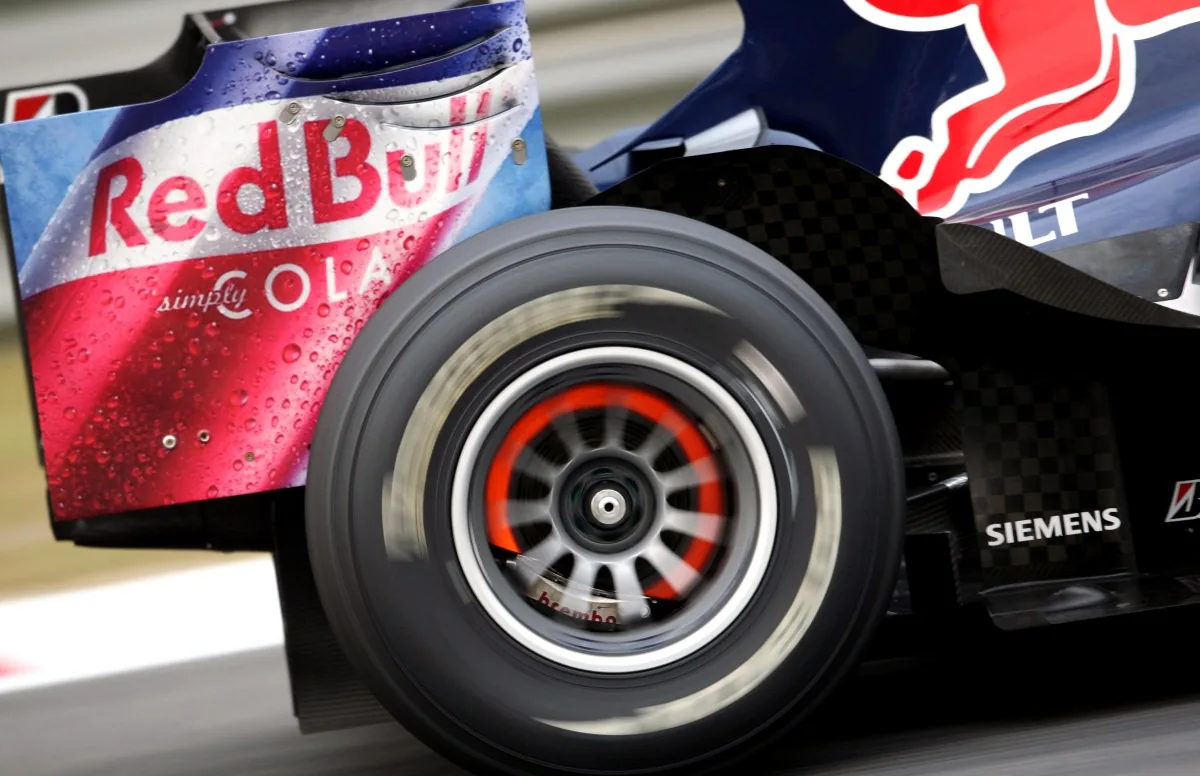
Close-up of a Red Bull-liveried Formula 1 car’s wheel, showing a red-orange glowing brake disc behind the blurred spokes.

Friction and Visible Light Emission

In high-downforce racing, the intense friction generated when pads clamp against carbon discs converts massive kinetic energy into thermal energy. Once these components heat up sufficiently, they emit visible light. Understanding Why F1 brake discs glow red helps clarify that a luminous rotor is a natural physical consequence of severe deceleration rather than an automatic sign of mechanical distress.

Operating Windows Versus Overheating

Carbon-carbon brakes rely on a delicate thermal window: testing accounts note that they perform poorly when cold, meaning heat retention is essential for initial bite, yet they must also shed heat via ventilation holes to prevent excessive wear or loss of efficiency. A visible red glow indicates high operating temperature, but without knowing the specific component limits and thermal dissipation rates, visual brightness alone cannot tell observers whether hardware is operating safely or nearing failure.

Official reference: Formula 1 official news and results.

Saturday, 31 October 2026

Why Formula 1 Driver Comparisons Often Blur On-Track Rivalry and Outside Controversy

Three dark helmet symbols numbered 1, 2 and 3 beside the text “Top 10 Most Controversial F1 Drivers of All Time (2025 Edition)” on a cream background.

Mixing Sporting Infractions with Off-Track Disputes

When assessing Formula 1 drivers side by side, historical retrospectives frequently blend very different types of controversy together. A ranking such as the Top 10 Most Controversial F1 Drivers of All Time (2025 Edition) demonstrates how subjective and broad these evaluations can become. Drivers are often grouped together despite their entries spanning intentional championship collisions, sporting disqualifications, official rule changes, team politics, or personal conduct away from competition.

Because these assessments combine entirely different categories of incident, treating a controversy index as an indicator of racing conduct or driving temperament is fraught with caveats. For instance, Michael Schumacher's disqualification from the 1997 World Championship after colliding with Jacques Villeneuve represents a direct disciplinary sanction over an on-track collision. By comparison, Lewis Hamilton's inclusions in similar discussions combine a 2009 sporting disqualification for misleading race stewards with subsequent regulatory disputes regarding jewelry mandates. These events address entirely separate aspects of motorsport governance rather than a singular style of driving.

The Impact of Direct Rivalries and Team Context

Head-to-head driver comparisons also complicate how individual actions are framed over time. The persistent clashes between Ayrton Senna and Alain Prost during the 1989 and 1990 Japanese Grands Prix cemented an enduring narrative of championship conflict, including Senna's admission of deliberate retaliation in 1990. However, evaluations of Prost also incorporate paddock politics and accusations of team favoritism that do not represent formal findings. Similarly, intra-team friction, such as Nigel Mansell's fierce relationship with Nelson Piquet at Williams, demonstrates how internal operational tension often colours retrospective evaluations of aggressive racecraft.

External circumstances further obscure direct comparisons. In the disputed conclusion to the 2021 championship involving Max Verstappen, the FIA subsequently acknowledged human error regarding race direction and safety-car procedures rather than driver wrongdoing. Likewise, while Fernando Alonso benefited from the safety car triggered by Nelson Piquet Jr. at Renault in 2008, team-level scandals cannot be assumed as evidence of driver orchestration without substantiated proof. Meanwhile, Niki Lauda's withdrawal from the wet 1976 Japanese Grand Prix over safety concerns illustrates how prudent driver decisions can spark public debate alongside disciplinary matters. Reading historical driver assessments requires separating racecraft and regulations from broad controversies.

Official reference: Formula 1 official news and results.

How Formula 1 Schedules Official Press Conferences Across a Grand Prix Weekend

Editorial illustration of a stylised microphone and speech bubbles for United States GP: Newey, McNish and Budkowski named for Friday press conference

Pre-Event Appearances and Result-Based Sessions

Formula 1 grand prix weekends follow a structured timetable that determines when drivers and senior team figures face the media room. Leading into the 2026 United States GP: Newey, McNish and Budkowski were announced for Friday alongside a group of six drivers scheduled across Thursday, reflecting the split between pre-arranged media duties and performance-based obligations. Prior to track running, the FIA publishes selected participant lists, whereas the later sessions on Saturday and Sunday are reserved strictly for the top three qualifiers and the podium finishers.

Understanding how these schedules operate clarifies why certain competitors appear in official briefings while others do not. Early-weekend attendance is set by official selection rather than on-track form, while post-qualifying and post-race appearances depend entirely on the final classification. Because car characteristics, strategic choices, and weekend operational programs vary significantly across teams, media appearances provide context around technical and operational challenges rather than direct measures of relative driver pace.

Official reference: FIA's announcement, dated 21 October.

Why MotoGP Red Flags Complicate Direct Rider Comparisons

Editorial illustration showing a red flag on a dark pole within a rounded beige panel, with a MotoGP restart rules title to the right.

How Interrupted Distances Skew Performance Baselines

When comparing two MotoGP riders across a Grand Prix weekend, a stoppage can fundamentally distort the metrics fans normally rely on, such as tyre management over a full stint or raw race pace. Understanding the MotoGP red flag restart rules highlights why finishing orders from interrupted events rarely represent a straightforward head-to-head contest. Under the FIM sporting regulations, an interruption before the leader completes three-quarters of the scheduled distance normally triggers a restart. Depending on whether the stoppage occurs before or after three completed laps, the event either resets into an entirely new shortened sprint or resumes as a second part using the classification at the interruption.

Grid Resets and Hardware Variables

These regulatory mechanisms introduce major variables that complicate driver and rider comparisons. If an initial race completes fewer than three laps, it is declared void: the original starting grid is restored, pre-race grid penalties apply again, and riders who missed the original sighting lap are permitted to line up. In contrast, if three or more laps were logged before the red flag, only riders actively competing and reaching pit entry within five minutes are eligible to restart, forming up according to the calculated interrupted running order. In both scenarios, teams are permitted to change machines, perform repairs, and refuel during the pause. A rider who struggled on initial setup gains an opportunity to switch bikes, while an athlete who had built an early advantage sees their gap wiped out completely. Because of these distinct interventions, comparing overall pace or racecraft across a red-flagged Grand Prix requires separating the distinct segments rather than treating the final points table as a continuous measure of form.

Official reference: official red flag guide.

How MotoGP Yellow Flag Rules Distort On-Track Driver Comparisons

Illustrated yellow flag on a dark pole in a rounded beige panel, with a heading to the right.

Zone Boundaries and Instant Positions

Evaluating rider performance through head-to-head overtakes requires knowing where passing is legally prohibited. Under MotoGP yellow flag overtaking rules, competitors must slow down and refrain from passing across the entire marshalled sector until reaching the exact point where a green signal is displayed. Passing the physical crash or obstacle itself does not restore racing conditions. Consequently, a sudden pause in an overtaking battle or an inability to challenge an opponent across a specific micro-sector reflects regulatory restraint rather than a lack of pace or racecraft.

Self-Correction Versus Stewards Interventions

Track position changes during yellow flag periods can further obscure direct comparisons. If a rider executes an improper pass but immediately recognises the error, regulations allow them to deliberately let every overtaken competitor pass back to avoid sanction. When this sequence occurs away from broadcast cameras, standard lap charts merely show positions fluctuating. If the position is not voluntarily returned, race direction communicates an instruction via dashboard messaging, giving the rider a defined window from their next finish-line crossing to comply. Interpreting these positional shifts as raw pace advantages overlooks how compliance timing shapes track battles.

Distortions in Qualifying and Practice Timesheets

Direct lap-time comparisons between teammates in practice and warm-up sessions are particularly vulnerable to yellow flags. In non-race sessions, simply passing a waved yellow flag or lighted signal triggers automatic cancellation of that lap time, regardless of whether an overtake took place or traffic was affected. Comparing single-lap performance metrics without accounting for flag deployments can lead to flawed conclusions, as an interrupted lap reveals nothing about a rider's underlying setup or competitive ceiling.

Official reference: danger ahead beside the track.

How Blue Flags Affect Laptimes and Driver Comparisons in MotoGP

Editorial illustration with a blue flag in a rounded beige panel on the left and a heading on the right.

Context-dependent signals across sessions

Directly comparing two riders based solely on raw lap times or race pace often overlooks the operational disruption caused by track signals. Under standard MotoGP blue flag rules, a rider being shown the signal is informed that an overtake is imminent, but their mandatory duties shift depending on whether the action occurs in practice, pit exit, or a race. During practice runs, a rider receiving the flag must let the faster machine through and avoid disturbing competitors by cruising slowly along the racing line, whereas exiting pit lane prompts a warning post to prevent entering riders from impeding oncoming circuit traffic.

In race conditions, lapped riders must yield to every machine lapping them at the earliest opportunity, while overtakes between lapped competitors under the signal are explicitly prohibited. Because the rule defines neither a fixed corner count nor a standardized maneuver for yielding, the time conceded while moving off the preferred line introduces uncontrolled variables into comparative timing analysis.

Handling the finish line and regulatory ambiguities

The signal also produces unique scenarios at the conclusion of a grand prix. When backmarkers circulate directly ahead of the race leader crossing the stripe on the final lap, officials present both the blue and chequered flags simultaneously. This ends the leader's contest immediately, yet requires the preceding riders to circulate for one additional lap to secure their own chequered flag.

Interpreting rider performance under these constraints requires caution. While official championship guidelines note that failing to acknowledge track signals can draw penalties, regulations provide no automatic sanction specifically for blue-flag delays, nor can timing sheets isolate precisely how much pace a rider surrendered while managing traffic.

Official reference: MotoGP’s official flag guide.